


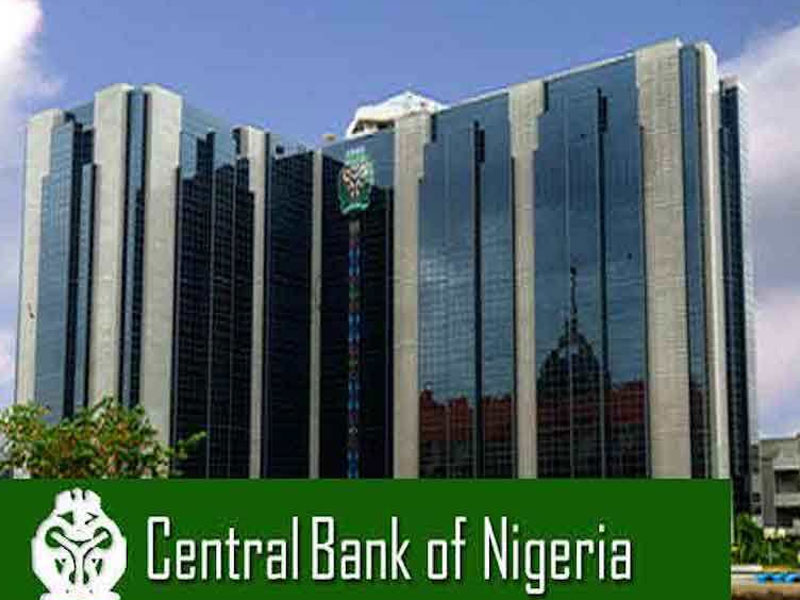
Following the recent move by
the Central Bank of Nigeria to end milk importation in the country,
Adedayo Adejobi writes on the likely benefits of the policy on the forex
reserves as well as the dairy market
Milk is a dairy product rich with
protein, iodine, calcium, and several vitamins, and loved by many
Nigerians. In the United Kingdom, the leading milk brands available at
supermarkets are Tesco and Sainsbury’s milk. In France, most consumers
buy Délisse and Carrefour milk. In the Netherlands, Campina is a
well-known milk brand. The Theo Müller Group, which owns the milk brands
Müller and Weihenstephan, is the market leader in dairy manufacturing
in Germany. The Europe-wide
operating dairy company Arla Foods is based
in Denmark. TINE is the largest dairy cooperative in Norway and produced
milk with a volume of 377 million litres in 2016.
In Nigeria, the popular leading milk
brands are Peak, Dano, Three Crowns, Loya, Nuna, and Nunu. There is
hardly any of these brands that are fully locally produced in Nigeria.
Asides milk, huge prospects lie in
yoghurt and sour milk drinks. The category also has much scope to expand
from popular unbranded, cottage products to branded products.
In the market, drinking yoghurt, a
by-product of milk presently drives the overall category and is expected
to continue to grow. This is the kind of product traditionally favoured
in Nigeria through local products such as “Kunnu”, and is being branded
and sold in both traditional and modern retail outlets; it is
experiencing fast growth.
Nigeria is a potential market for 1.3 million tonnes of milk valued at about N450 billion annually.
The importation of milk powder and other
processed dairy products were estimated at $275 million in 2006.
Industry sources also estimate Nigeria’s national herd at 14 million
heads (including approximately 900,000 milking cows). The average yield
from this traditional system is 0.7 –1.5 litres of fluid milk per day.
Currently, most of Nigeria’s dairy
processors import milk powder and reconstitute it into liquid milk and
other dairy products such as yoghurt, ice cream, and confectioneries.
Others repackage imported powdered milk into small affordable sachets.
The imported dairy products (mostly milk powder) come from New Zealand,
Australia, South America, the EU, India, Ukraine, Poland, and other
smaller suppliers. Multinational firms including Friesland foods
(Netherlands), Glanbia (Ireland), Cussons-PZ (UK), Promasidor, etc.,
have either partnered or acquired some Nigerian dairy firms for
re-constituting and packaging imported milk powder.
In the light of CBN’s drive, THISDAY
took a cursory look at the Dutch dairy industry, which is a leading
economic sector in the milk business. Between 2013 and 2017, milk
consumption in the Netherlands continuously decreased.
In 2010, the Dutch on average drank just
over 50 litres of milk per person. Seven years later, the per capita
consumption of milk was just over 41 litres on average. In 2013,
approximately 810 million litres of milk were consumed in the
Netherlands. By 2017, this had decreased to roughly 747 million
litres. Milk, however, was not the only category experiencing hard
times. Meanwhile, as milk consumption decreased in the Netherlands,
Nigeria experienced has seen a spike in the consumption volume of milk,
dairy drinks, and products, which rose by roughly eight percent in the
same period. As expected, this increase in the total milk consumption
also resulted in a rise of the per capita consumption of milk in
Nigeria.
Supplying dairy to the world, in 2017,
dairy exports from the Netherlands amounted to just over 7.8 billion
euros. The majority of the Dutch dairy exported was destined for other
European countries. After Europe, the most important export markets were
Asia and Africa. As the Netherlands exports far more dairy products
than it imports, the country had a positive trade balance of 4.2 billion
euros that year.
Upon THISDAY checks, a large share of
the concentrated milk produced in the Netherlands is exported to other
countries, including Nigeria.
In the last decade, concentrated milk
exports grew considerably, reaching a value of just over 475 million
euros in 2017. That year, the import value of concentrated milk and
cream was just a fraction of the export value, at roughly 126 million
euros. By comparison, the export value of non-concentrated milk in the
same period was nearly 841 million euros.
CBN’s Justification
According to the Central Bank of
Nigeria’s recent report, the increasing consumption trend cost the
government a substantial amount of foreign exchange to import dairy
products into Nigeria to the tune of $1.5 billion.
CBN Governor, Mr. Godwin Emefiele, last week confirmed the move to restrict milk importation into the country.
According to the bank, the country
spends between $1.2 billion and $1.5 billion annually on milk
importation, which it described as unacceptable.
Owing to this, Emefiele said domestic
production of milk had the potential to reduce recurrent farmer-herder
clashes, which have stifled the growth of the agricultural sector.
He stated that despite the CBN’s initial
engagement with major players in the milk industry, there were attempts
by some big players to frustrate the policy on local production of
milk.
Emefiele explained: “We believe that
milk is one of those products that can be produced in Nigeria. Milk
importation has been going on in Nigeria for over 60 years. If you
Google West African Milk or Friesland Campina today, they say that they
have been importing milk and that they have been in Nigeria for over 60
years.
“Today, the import of milk annually
stands at $1.2-$1.5 billion. That is a very high import product into the
country. Given that it is a product that we are convinced that it is a
product that can be produced in Nigeria.
“The reason some say that our cows are not producing much milk is that our cows roam around, they don’t have water to drink.
“When the policy on the restriction of
FX started, we considered including milk to the list. Then we thought
that based on the sentiments that people would show, that we should be
careful.”
Furthermore, Emefiele disclosed that the
bank held meetings with leading milk producers in the country to
encourage them to begin the process of producing milk in 2016.
However, he pointed out that there was no significant progress on the part of the companies.
“We are saying the amount we spend on
milk in this country is too high, we need to reduce it. We are
determined to make milk production in Nigeria a viable economic
proposition. If you need a loan to acquire land, do artificial
insemination, grow grass or even provide water, we will give you.
“We are getting to the end of the road
of milk importation in Nigeria. The era of restriction of forex for the
importation of milk is very close, sooner than they expect,” he added.
Also responding to critics of the
intended policy, the Director, Corporate Communications, CBN, Mr. Isaac
Okorafor, stressed that Nigeria and the welfare of all Nigerians come
first in all its policy considerations over the years.
According to Okorafor, the critics were
attempting to mislead the general public by misrepresenting the
ordinarily unassailable case for investments in local milk production
and the medium to long-term benefits of the planned policy.
“While we are aware that some of our
policies may hurt some business interests, we are thankful to Nigerians
for the buy-in and intense interest in the policies of the CBN.
“As a people-oriented institution,
however, we shall remain focused on the overarching and ultimate welfare
of the Nigerian masses.
“We, therefore, wish to, once again,
reiterate our policy case as it relates to the planned restriction of
access to Nigeria’s foreign exchange market by importers of milk:
Nigeria and the welfare of all Nigerians come first in all our policy
considerations. Being an apolitical organisation, we do not wish to be
dragged into politics. Our focus remains to ensure forex savings, job
creation and investments in the local production of milk.
“For over 60 years, Nigerian children
and indeed adults have been made to be heavily dependent on milk
imports. The national food security implications of this can easily be
imagined, particularly, when it is technically and commercially possible
to breed the cows that produce milk in Nigeria,” the CBN director
insisted.
Okorafor pointed out that about three
years ago, the CBN started a policy to encourage backward integration to
conserve foreign exchange and create jobs for the people.
Included in this policy package,
according to him, was the introduction of the highly successful policy,
which restricted the sale of forex from the Nigerian foreign exchange
market for the importation of some 43 items goods that could be produced
in Nigeria.
Nigeria’s heavy import dependence is
majorly responsible for the high forex outflow and the perennial
weakness suffered by the naira.
The central bank had explained that the
selective protection policy on FX restriction to some imports was
carefully crafted with a view to reversing the multiple challenges of
dwindling foreign reserves, contracting Gross Domestic Product (GDP)
-recession and what he described as an embarrassing rise in the level of
unemployment that confronted the Nigeria economy at the time. According
to the CBN, the policy was aimed at stimulating the domestic economy in
order to enhance domestic production and protect local industries from
undue foreign competition and take-over.
Therefore, the director of corporate
communications noted that arising from the success of the restriction
policy, the bank approached some milk importers, like it did for rice,
tomato, and starch and asked them to take advantage of CBN’s
low-interest loans to begin local milk production instead of relying
endlessly on milk imports.
“Today, although there have been some
successful attempts at producing milk locally, the vast majority of the
importers still treat this national aspiration with imperial contempt.
“For the avoidance of doubt, milk
importation is not banned. Indeed, the CBN has no such power. All we
will do is to restrict the sale of forex for the importation of milk
from the Nigerian foreign exchange market.
“We wish to reiterate that we remain
ready and able to provide the needed finance to enable investors who
genuinely want to engage in milk production.
“The on-going resort to blackmail and
undue politicisation through the use of social media attacks can only
serve to strengthen our resolve to wean our country from the clutches of
powerful and highly influential traders and dealers, who have kept the
masses of our people hostage to foreign consumption and condemned our
youths to perpetual unemployment.
“We call on Nigerians to enlist in this
vanguard to take our economy back from vested interests, make our
country a productive economy and create jobs for our teeming youths,” he
said.
The central bank strongly believes that
the success it achieved with rice production and some other commodities
under its Anchor Borrowers’ Programme (ABP) can also be extended to the
dairy sub-sector.
Analysts’ Endorsement
Endorsing the apex bank’s move,
Executive Director, DataPro Limited, Mr. Ayodele Adeoye, said: “It is
common sense to restrict spending to what you have. It is common sense
to prioritize your needs in the face of scare resources. It is a known
fact that forex is scarce in Nigeria. Why is it scarce? Nigeria as a
country does not produce and export enough to earn it.
“This is against the fact that we are
not producing what we eat and not eating what we produce. Consequently,
by our conduct, we restrict the supply of forex into the economy and
expand the demand for it.
“The resultant effect of this is an
unfavorable exchange rate regime. It is in this light that the current
forex policy plan of CBN regarding milk importation should be endorsed.
Any policy that cuts down forex demand and creates jobs for youth that
are now becoming very restless should be supported by well-meaning
Nigerians.’’
Also, from a legal perspective, Mr.
Chuks Nwana of Chuks Nwana & Co, however, said: “On the face of it,
any well-articulated policy on backward integration will enjoy public
support, but the real challenge is in the implementation of such
policies.
“There have been many such policies in
the past which was hijacked by local merchants and the consequence was
high prices and the creation of multi-billionaires on account of a
slight change in monetary policy.
“A lot of stakeholders would have been happier if a transition agenda was created for about a year with massive publicity.
“In the short-term, it will be nice to
request a bi-annual review of the policy to assure ourselves that it is
not doing more harm than good.’’
Giving credence to the CBN’s position,
an investment analyst and Partner, at Stransact Partners, Mr. Yomi
Salau, said, “Nigerians have depended on importation of dairy products
for some decades despite the abundance of cows in the country. At the
moment, most Nigerians are actually proud of purchasing imported dairy
products.
“Market survey has revealed that
imported dairy products move faster than those produced locally.
According to the Food and Agricultural Organisation of the United
Nations (FAO), 2015, Nigeria is ranked 14th country in the world with a
number of cows reaching about 20 million, yet it is pathetic to note
that livestock production has only contributed about 12.7 percent to the
nation’s agricultural Gross Domestic Product (GDP).
“This fact poses threats to the economy.
It is in this light that the CBN deemed it necessary to commence a
backward integration policy to conserve foreign exchange and create more
jobs to the growing populace.
“The CBN policy should not be mistaken
for an outright ban on the importation of milk into the country, but
rather to encourage local milk production. Simply put, the policy is
aimed at reminding importers of milk about the need to re-jig their
entrepreneurial skills and loyalty to the motherland.
“To justify its restriction of the sale
of forex policy, the CBN is currently giving low-interest loans to local
producers of Milk. I want to believe that an entrepreneur who is
genuinely interested in the economic growth of Nigeria will rather apply
for the loan than invest his/her time on destructive criticism of the
CBN policy.
“It is imperative to note that most of
the multinational dairy product companies in Nigeria have over time
turned themselves into marketing agents for their foreign parent plants
instead of operating as manufacturers of dairy products in Nigeria.
“This development is partly attributable
to the high cost of production and the poor state of infrastructural
development in the country.
“Primarily, the policy, if implemented
will promote and accelerate local production of milk in the country
which will ultimately lead to conserving about $1.5 billion being spent
annually on the importation of milk and dairy products.
“If the government is sincerely
interested in enforcing this policy, I want to believe that after a few
months, the foreign manufacturers of dairy products will be forced to
start establishing new dairy plants in Nigeria.
“To tackle this challenge, the Nigeria
Customs Service must be up and doing. That said, the government (both at
Federal and State levels) must also lead by example, by going into the
partnership and or investing hugely in the development of local dairy
plants.
“Otherwise, the Nigerian government may
end up spending huge sums on the treatment of diseases caused by
malnourishment of citizens especially children,’’ he said.
Advising the government Salau said,
‘‘The government can actually encourage the establishment of dairy farms
and processing plants by introducing mouth-watering incentives in
addition to the current CBN’s low-interest loans. Examples of the
incentives include tax holidays, dairy products free trade zones, etc.
“As a person, I will suggest that the
CBN draw up a fresh timeline for the implementation of the restriction
policy such that the existing dairy companies and importers of milk are
given sufficient notice period on implementation of the policy.
“This will also give stakeholders in the
dairy products sector, the opportunity to map out sustainable dairy
plant investment plans.’’
The CBN’s move to cut down forex demand
and create jobs for youth should be supported by well-meaning Nigerians.
To enjoy public support, there is, however, the challenge of properly
articulating the good intentions – how, what, when, why and where this
policy would be implemented, else the policy may face some challenges.
No comments :
Post a Comment