


Ebere Nwoji
Nigerian
insurance firms may lose 72 per cent of the insurance business in the
Dangote Oil Refining Company whose insured value has been put at
$6.8billion to foreign insurers when the
company becomes operational
because of their low capital base, THISDAY has learnt.
In
addition, they might lose another $8 billion energy insurance business
from energy firms to foreign insurers due to their current low capital
base and lack of underwriting technical capacity.
The
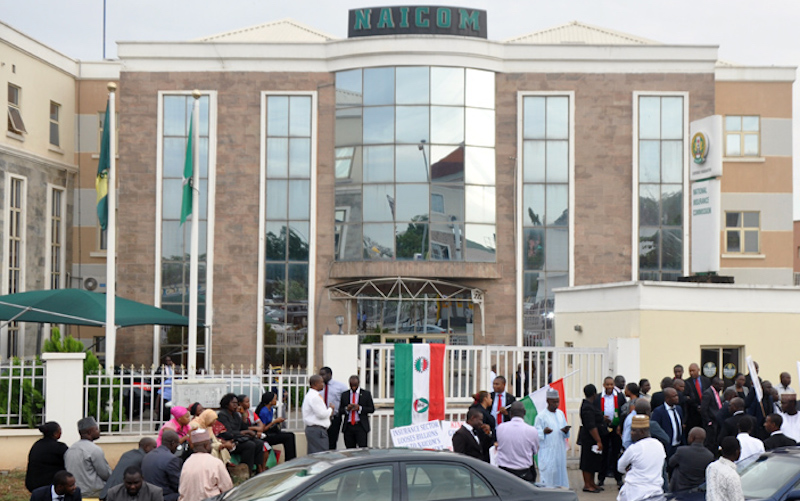
National Insurance Commission (NAICOM), projected the losses at the
weekend at a seminar it organised for journalists at Ijebu Ode, Ogun
State, while justifying reasons for its determination to prosecute the
ongoing recapitalisation of insurance companies.
NAICOM’s
Director, Policy and Regulation, Mr. Pius Agboola, said the ongoing
recapitalisation was to position the sector to independently handle
big-ticket transactions in Nigeria as well as to end capital flight and
support economic development of the country.
Agboola,
while speaking on reasons for the ongoing recapitalisation in the
sector, said insurance had continued to lose substantial part of the
income that was supposed to grow the industry to foreign counterparts
due to low capital base.
He added
that among the quantum of businesses currently approved-in -principle
by the regulator to be taken abroad were aviation refuelling liability
insurance from II Plc (former Mobil Oil Nigeria Plc) with the sum
insured valued at $1,000,000,000.
He
expressed regret that of the above stated amount, the local insurers had
the capacity to insure only 10.03 per cent, while 89.97 per cent would
be ceded to foreign insurers from mainly European and American markets.
According
to him, similarly, the sector is losing another risk valued at
$7,010,970, being the sum insured on Third Party Nuclear Liability
Insurance from Centre for Energy Research and Training (CERT) in which
indigenous insurers have capacity to insure only 0.05 per cent of the
entire business, while 99.95 per cent would be taken abroad.
This is
in addition to other four major high-ticket businesses in which the
sector is losing over 50 per cent of the sum insured to foreign insurers
as a result of low capital base and lack of technical underwriting
capacity.
Agboola
said the Combined Property Damage /Machinery Breakdown /Liability
Terrorism /Political Violence Risk, belonging to Sahara Power (Egbin
Power Plc), with the sum insured valued of $3.1 billion would have 53
per cent insured abroad while 46.295 per cent would be insured locally.
He,
however, said the Nigerian National Petroleum Corporation (NNPC)
retained 78 per cent of its Consolidated Insurance package risk valued
at N99,585,532,592 as sum insured with local insurers, while 22 per cent
was taken abroad.
Also,
Chevron Nigeria Limited insures 75 per cent of its Energy Package Risk
valued at N14.311billion with indigenous insurers while 25 per cent is
taken abroad; just as Mobil Producing Nigeria Limited insures 70 per
cent of its Energy package/physical damage and O.E.E valued at $14.098
billion with local insurers while 30 per cent is taken abroad.
Agboola
also said Lafarge Hoicim insured 68.73 per cent of combined property
damage/business interruption and public liability, valued at
$564,882,644,410, as sum insured with local insurers while 31.27 percent
was taken abroad while Dangote Fertiliser insured 60 per cent of its
Construction/Erection All Risk and third party liability risk valued at
$1.128 billion with local underwriters.
Considering
the quantum of risks ceded abroad due mainly to low capital, the Deputy
Commissioner for Insurance, Technical, Mr. Sunday Thomas, who
represented the Commissioner for Insurance at the seminar, said the
commission would, “prosecute as never before, the recapitalisation
process of insurance companies to ensure that the sector is positioned
to support economic development of the country.”
He said
even though operators might not have the wherewithal for the
recapitalisation of their respective companies, the onus was on the
regulator to set the standards that would strengthen the insurance
companies’ capacities and place them in a position to undertake
insurance businesses.
Giving
more insight into the need for the recapitalisation, Thomas, said: “the
process was meant to enable the sector to retain insurance businesses
instead of allowing it to go outside the country; turn the image of the
insurance market, strengthen financial base of the companies, increase
the sector’s contributions to gross domestic product of the country,
among other benefits.
“We have the mandate to ensure that the recapitalisation throws up more solid companies.
“Our hands are open to welcome investors in new companies or existing companies.”
He
enumerated the benefits of the recapitalisation to include the need for
capital restructuring and improvement in the liquidity position of the
insurance underwriters.
According to him, the insurance industry’s life cycle is still at an early growth stage, which needed to be explored.
NAICOM recently fixed August 20, 2019 as deadline for operators to submit their recapitalisation plans.
Also,
firms that have decided to adopt mergers and acquisition strategy were
directed to perfect such deals 60 days to the recapitalisation deadline.
No comments :
Post a Comment