United Wants to Sell Your Seat to Someone Else for More Money
If you’ve bought a seat on a flight that’s
overbooked, the airline may try to resell your spot for a higher price.
But don’t freak out yet: There’s an upside for passengers, too.
By
Nikki Ekstein
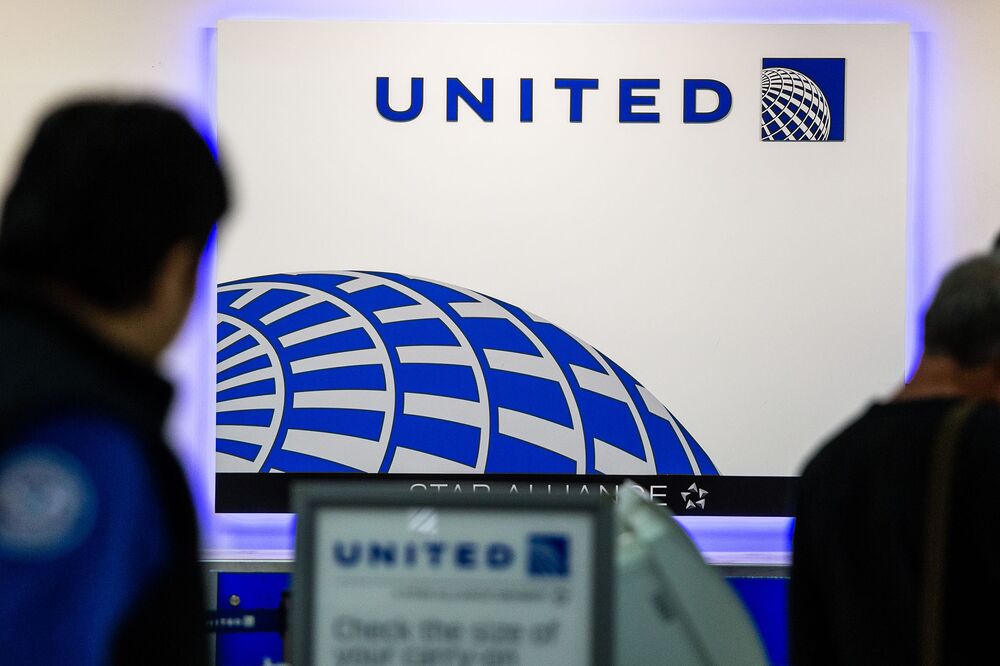
Photographer: Tim Fadek/Bloomberg
This week, United Airlines Inc.
is quietly unveiling a new technology platform that it will use to
manage the problem of oversold flights—and, in the same breath, turn
them into a profit opportunity. With the
help of its new Flex-Schedule Program, the airline is piloting a way to
buck the trend of involuntary bumping—the term for kicking passengers
off oversold flights—without necessarily offering four-figure payouts to
passengers at the gate, or curbing their practice of overselling inventory. (The airline suffered a publicity black eye earlier this year when police dragged a man off
an overbooked plane, and has since promised to offer high-price rewards
to fliers who agree to change flights at the last minute.) Instead,
it’ll simply offer buyouts earlier—up to five days in advance. The
upside for United? The chance to resell your ticket at a wider profit
margin.
How It Works
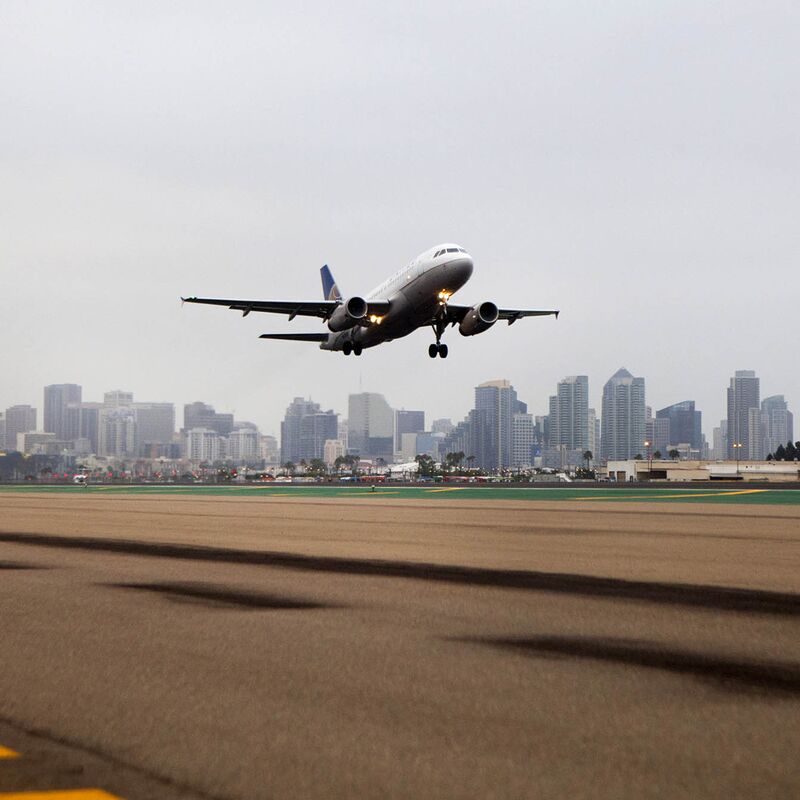
A United plane takes off at San Diego International Airport.
Photographer: Sam Hodgson
In partnership with Volantio,
a third-party aviation technology startup based in Atlanta, United will
soon begin sending e-mail newsletters with subject lines such as “Are
You Flexible with Your Travels to Los Angeles?” Inside, travelers will
have the option to sign up for potential rewards—so long as they’re
willing to budge a little on their flight itineraries. Only
those who book on United.com and opt in to receive marketing messages
will be eligible for the sign-up offer—and signing up doesn’t guarantee
that you’ll be asked to change your flight. If it’s looking like your
seat has turned into a hot commodity, though, you’ll be offered the
chance to tweak your itinerary in exchange for a travel voucher up to
$250. And tweak is the key word: You’ll never be asked to change dates
or airports, and your seat preferences will carry over, with clear
indicators if you’re taking a downgrade from Economy Plus to regular-old
Economy. (Downgrades will be rare, but upgrades will be even rarer.)
Accept the bid if you wish, and you’ll be rebooked within 24 hours.
It’s Not About Overbooking
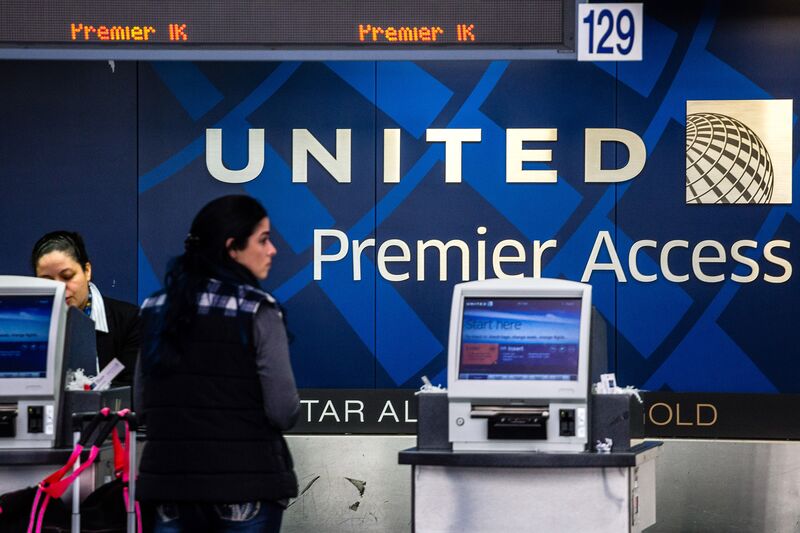
Business travelers stand to gain last-minute options through United’s new Flex-Schedule Program, debuting this week.
Photographer: Tim Fadek/Bloomberg
After
months of negative press—the doctor who was dragged off the plane, the
infant whose $1,000 seat was inadvertently resold—United’s image has
taken a nosedive. According to Azim
Barodawala, the chief executive of Volantio who created the technology
and brought it to United, the Flex-Schedule Program could be an
opportunity to change the narrative with the help of innovative
technology, rather than cumbersome regulations. “If you can offer a
buyout to a customer in advance, everyone will be happier,” he said.
“For airlines, it represents a release valve—a way to shuffle people
around when you’re capacity-constrained. This benefits the customer as
well, you’re creating choice for them, and that’s what gets me really
excited. [Passengers] get the short stick a lot.” But
Dave Bartels, vice president for pricing and revenue management at
United, doesn’t see the Flex-Schedule Program as “having a lot to do
with overbooking.” Although there will be times when the program
helps to move people off an overcrowded plane—whether it was oversold,
lost capacity due to an aircraft change, or had to reduce weight loads
due to hot weather—he told Bloomberg that the main goal is to free up a
valuable seat and offer it to someone who needs it more. “It won’t mean
we’re overbooking the aircraft more because we have this tool,” he
said. “But I also don’t know why it would lead to less overbooking.”
A Boon for Business, and Business Travelers
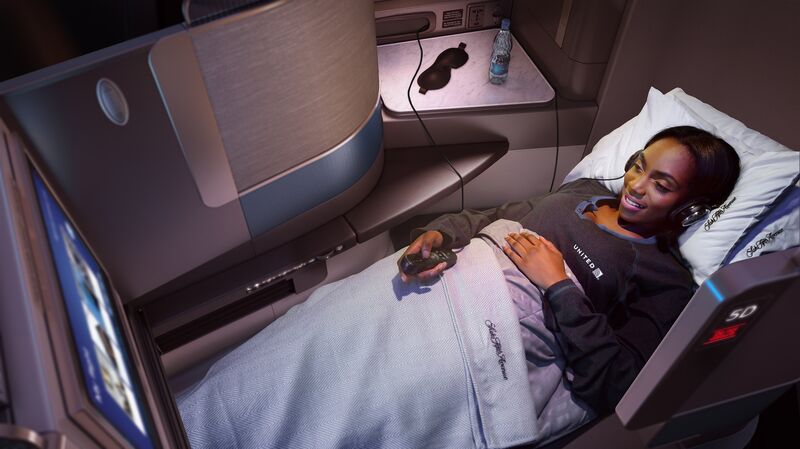
United’s
new Polaris cabins are delayed, but the Flex-Schedule Program will be a
boon for business travelers while they wait for swanky new seats.
Source: United Airlines
When
Barodawala first brought his idea to United, he used a metaphor
involving three egg cartons, each lined up along their short sides.
He filled them with a mixture of red- and green-dyed eggs: bargain
shoppers and deep-pocketed business travelers. “What would you say,”
Barodawala asked, “if you could move some of these red eggs [to empty
slots in a different carton], and just replace them with green eggs?” The
executives lit up at the idea. As the board spitballed over how much
this could represent to their bottom line each year, exorbitant numbers
were thrown around: eight figures? Nine? “It’s
too premature to put a number to it,” Bartels said, when asked about
what this program could mean for the company’s financials. But he’ll be
looking to evaluate that by August, when the pilot program is set to
end. Whatever the number, the program
is a rare win for both company and customer. It’s a way for airlines to
create revenue without relying on ancillary fees—an annoying tactic that
has dominated the aviation business in recent years. And for business
travelers who often book at the last minute, it’ll open up inventory on
sought-after routes.
If there’s
a way to entice fliers to rebook prematurely on oversold or problematic
flights, gate agents and customer service staff stand to see their
stress levels go down, too. And leisure travelers—who can now accept
vouchers from home, without rushing to the airport and clearing security
first—come up winners, as well. The only folks complaining?
The guy who’s currently holding out for the maximum $1,350 payout for
involuntary bumping at the gate. (Holdouts like him might still cash in,
said Bartels, but he’s not counting on too many of them.)
Know Your Odds
Will your seat be worth more than you paid for it? You’ll only find out if you opt into United’s new program.
Source: United Airlines
Here’s
how United will think about making offers. “Let’s say the 5 o’clock
flight from Chicago to Boston normally sells 12 seats in the three days
before it departs,” Bartels said, hypothetically. “If I see that that
flight is full a week ahead, I’ll be pretty confident that I can resell
any seats that I open up based on my seasonalized historical patterns.” So
he’ll reach out by email to a handful of opted-in passengers—the pilot
program will target a limited group of MileagePlus members—offering them
seats on the less-desirable 3 p.m. or 8 p.m. departures. (Again,
hypothetical.) Bartels indicates that
leisure travelers will be the likely swappers on major business routes.
“That’s where we’re more likely to have an alternate option that’s
appealing to someone,” he said. And they’re also the routes that
executives are likely to need last-minute, no matter the price.
More Airlines Coming Soon
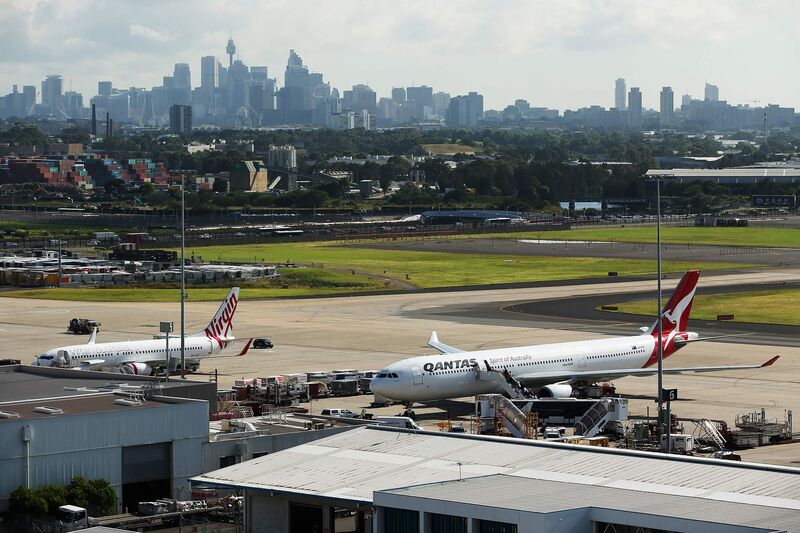
Qantas, whose planes are shown here in Sydney, is slated to adopt Volantio’s technology this fall.
Photographer: Bloomberg/Bloomberg
Several
other airlines will sign on with Volantio in the coming months:
Australia-based Tiger Airways will come online in August, followed by Alaska Air
in September and Qantas by October. Until now, Delta has been the
greatest innovator in this space, offering the occasional auction-style
bid for travelers to change flights at check-in—which is no more than 24
hours ahead of departure. Barodawala
sees potential for the technology to be even more useful to passengers
as it continues to evolve. “If someone is going to New York to Los
Angeles via Chicago,” he said, “and it’s the New York-to-Chicago route
that’s oversold, why not offer the passenger a direct ticket from New
York to Los Angeles?” You’d nix their connection, he said, and open up a
highly valuable seat. The same goes for passengers at risk of missing a
connection due to disruptions: “The airline could offer your seat to
someone whose priority is getting there faster, and you could take their
seat on a later flight that you’ll actually make.” He envisioned a
clean swap: no fees, no empty seats, no frantic rebookings, and happy
customers all around.
And airlines aren’t the end of the road
for Volantio, either. “This is a new world—it’s the future of where
travel is going to go,” said Barodawala. He painted an imaginary picture
of the W Hotel in Midtown East, looking to accommodate a big conference
or party on a nearly sold-out weekend. “What if they could reward some
guests for moving to the W Union Square and capture the business on both
ends?” United takes a more cautious
stance. “It’s hard to know where it’s going to go,” said Bartels. “We
want to see the volunteer rate, the percentage of people that indicate a
willingness, and then the conversion rate upon the offers being sent.” But if it helps prevent the airline from another overbooking scandal? We’re sold.


 Photographer: Tim Fadek/Bloomberg

No comments :
Post a Comment