


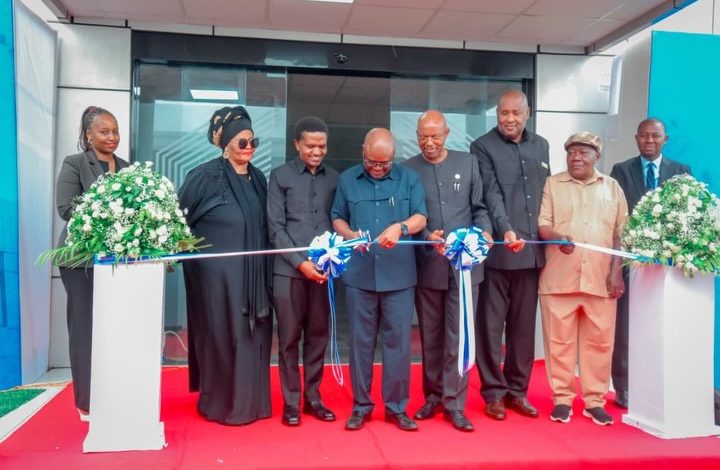
IN a move aimed at translating strategic ambitions under the Vision 2050 into tangible results, the government has launched a Sourcing and Export Centre alongside a Youth Investor Training Programme.
The initiatives are designed to equip local producers, traders and young entrepreneurs with the tools and knowledge necessary to expand into modern industrial production and international markets.
The Sourcing and Export Centre will provide a range of services including entrepreneurship training, guidance on meeting export standards, logistics coordination and linking Tanzanian businesses with international markets.
It will also assist entrepreneurs in verifying global suppliers, adopting modern production technologies and understanding foreign market requirements challenges that have historically hampered the country’s exporters.
Speaking at the launch at the Benjamin William Mkapa Special Economic Zone, Minister of State in the President’s Office for Planning and Investment, Prof Kitila Mkumbo, stressed that the programmes are tailored to empower local investors, especially youth, enabling them to transition from small-scale trading to industrial-level production.
“These initiatives are crucial for building a generation of Tanzanian entrepreneurs who can compete on a global scale,” Prof Mkumbo said, noting that the government’s focus on supporting local investment will be instrumental in achieving the nation’s Vision 2050 goals.
“In implementing Vision 2050, particularly through the Fourth National Development Plan, we aim to expand private sector investment, recognising it as the primary driver of national development,” he said.
He said that the initiative marks a new pathway for youth to enter the industrial economy, engage in production and access international markets.
Prof Mkumbo highlighted Tanzania’s strategic geographical position along the Indian Ocean, which positions the country as a regional trade gateway linking East, Central and Southern Africa.
He said that the coastline, inland connectivity and proximity to multiple regional markets provide a natural advantage for establishing Tanzania as a commercial hub.
However, he cautioned that without strengthening domestic production, the country risks remaining primarily a consumer of goods produced elsewhere.
“We want Tanzania’s private sector to compete in the regional market. The the African Continental Free Trade Area (AfCFTA) offers a very large market, but you cannot enter that market without preparing yourself to compete. If we do not build our competitiveness, our country will simply remain a market for others instead of selling our own products,” he said.
He added that youth are central to this vision because they represent the nation’s future.
Prof Mkumbo said the Youth Investor Training Programme is designed to nurture a new generation of Tanzanian producers and entrepreneurs capable of adding value to local resources and expanding the country’s export footprint.
The first phase, at the Benjamin William Mkapa Special Economic Zone based in the Mabibo, Dar es Salaam, will initially focus on agricultural product processing, particularly dried goods, with plans to expand into other sectors and economic zones according to market demand.
He said by 2030, the programme aims to empower between 50,000 and 100,000 young people to establish and manage businesses, with an additional target of around 5,000 youth-led enterprises in special economic zones nationwide.
The initiative is projected to generate one to three million direct and indirect jobs through production, processing and related industrial services.
Prof Mkumbo drew parallels with countries such as China, Singapore and Vietnam, noting that their rapid economic transformation leveraged special economic zones as platforms for industrial growth.
“Tanzania intends to adopt a similar model, tailored to its economic environment,” he said.
Echoing these sentiments, the Permanent Secretary in the President’s Office for Planning and Investment, Fred Msemwa said that the launch of the initiatives represents an early step in implementing Tanzania Development Vision 2050 and broader economic reforms.
Dr Msemwa commended TISEZA and private sector partners for taking early action ahead of the official rollout of the vision scheduled for July this year.
TISEZA Director General Gilleard Teri, said the Youth Investor Training Programme will equip young Tanzanians with practical skills in industrial production and global trade through hands-on training in export-oriented facilities.
Participants will gain expertise in value addition, particularly in processing dried and semi-processed agricultural products, advanced packaging techniques and compliance with international quality standards, enabling integration into global value chains.
During the first phase of implementation, between 30 and 50 young people will receive practical training within Export Processing Zones and Special Economic Zones, combining experiential learning with opportunities to develop products for international marDr Mwinyi kets
No comments :
Post a Comment