


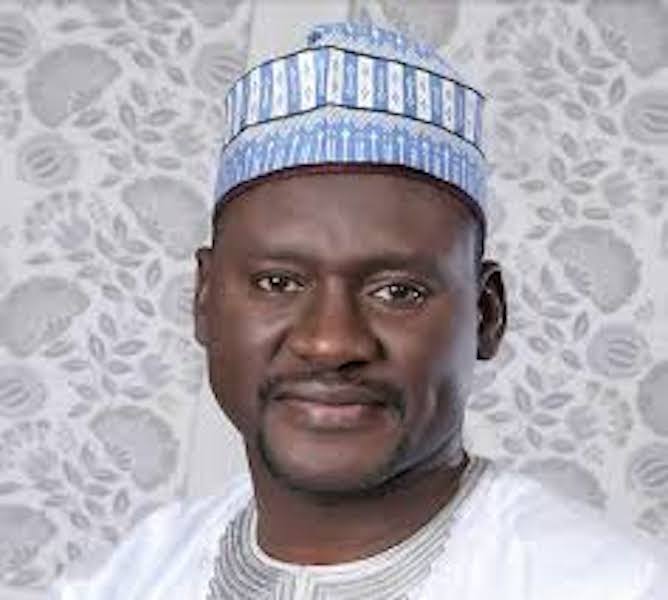
Executive Director, Civil
Society Legislative Advocacy Centre (CISLAC) Mr. Auwal Musa Rafsanjani,
at the just concluded 2019 Spring Meetings of the International Monetary
Fund and the World Bank Group in Washington DC, United States,
participated in five-day policy dialogue sessions with civil society
organisations, where views were exchanged on a wide range of issues
affecting nations and humanity. In this interview, Rafsanjani shared
with Funke Olaode some outcomes of the meeting, especially those
relating to subsidy removal, illicit cash flow, economic growth and
poverty eradication
What is your view on the economic projection for Nigeria by the World Bank and IMF?
It is very disturbing to see the World
Bank analysis of Nigeria’s economy. It is also very clear that because
of the absence of sound economic team that is why we are not actually
making the necessary progress in terms of consolidating and
strengthening our economy in Nigeria. Therefore, it is not surprising
given the fact that Nigeria has not make appreciable progress in terms
of diversification of economy, in terms of effective economic
management, which is as a result of sound policy or legislative
framework that would deal with the economy particularly the oil and gas
sector. You would recall that we have been advocating for the Nigerian
government to ensure that we have Petroleum Industry law passed in the
country which has been languishing in the national assembly.
It would have helped to ensure the
economy is strengthened, would have eliminated corruption, duplication
of responsibilities as well as inefficiency. Nigeria government is yet
to do that. Secondly, the non-oil sector has not been consciously
developed in a way that will help drive the economy. You have so many
areas that we as a nation is not utilizing very well. That is why we
have found ourselves in Zero Economic Stagnation which the World Bank
has rated us. And besides the World Bank, there are other institutions
that have warned Nigerian government in terms of ensuring that it should
have been more focus, more productive way of improving the economy
because once the economy is not rolling well, definitely, the issue of
poverty, employment will be affected.
According to the IMF Chief, Ms.
Lagarde, the country in the last four years has spent over N5 trillion
on subsidy which could have been channeled towards health, education and
infrastructure on subsidy. What is your take on IMF’s advice to Nigeria
on subsidy removal?
Nigeria should have done away with the
subsidy long time ago. The present administration promised to stop
paying subsidy because they discovered at that time that it is a scam,
it is a fraud and nothing is being subsidized. Unfortunately, we have
not seen that commitment being fulfilled by the government. The
government is spending a lot of money on subsidy. For me and many
Nigerians, the problem is not about subsidy, the problem is about
corruption, it is about inefficiency in the management of so called
subsidy because once some people imported petroleum to Nigeria, they
claimed to have brought certain amount of tones of petroleum which is
not being verified or authenticated and yet they get their payment. That
is why the problem is. Had it been the government had eliminated where
this fraud is we would not be talking about it. And if government had
taken steps to ensure that the refineries are working, you would not be
talking about subsidy. It is funny that Nigeria as an oil producing
country has to be spending that much to import petroleum for its
citizens consumption. If we are able to fix our refineries and make them
efficient, and effective, the question of subsidy would have been
eliminated.
The issue of illicit financial flow and how it can be tackled also came up. What do you think about it?
The illicit financial flow is a very
serious issue because in the region, Nigeria account for over 70 per
cent of the illicit financial flow in West Africa and this is an
alarming rate. It has not stopped. It is still happening therefore there
is no way a nation can have vibrant and productive financial system
once people are deliberate and consciously siphoning public funds
abroad. I think government anti-corruption should intensify more effort
to block these leakages and we must make sure that people that are found
guilty or caught in the act are interrogated and prosecuted. And the
refunded money can be injected back into the economy so the issues of
poverty and employment can be reduced.
Also, during the meetings, there
was a comment by some economic experts that poverty is like a time bomb
ready to explode. Do you agree with them?
We don’t have to wait until 2030 because
poverty has already exploded in Nigeria. When you have a large per cent
age of the population that is living in abject poverty and cannot avoid
descent living. They cannot afford education and so on they are already
in abject poverty and that is why you see a lot of crises going on in
Nigeria because people are already in poverty orchestrated by corrupt
public officials coupled with lack of government planning to come up
with programmes that would deal with poverty. For me, expansion of
economic base that would encourage diversification, more investment from
local and international investors that would help create jobs, which
would address the issue of unemployment. This is the reason why IMF body
is projection abject poverty or extreme poverty by 2030. A lot of
Nigerian youths are idle, they cannot feed themselves and you need to go
round as see how poverty is walking naked.
How do you think all the issues raised can be addressed and tackled?
As said earlier, sound economic team
being led by committed, knowledgeable personnel that understand global
economic framework should be put in place. Secondly, government must
eliminate wastage, shun corrupt official. Government must consolidate
easy way of doing business in Nigeria so that there would be business
and idle hands can find something to do because in the past last of
unfavorable environment has hindered many investors from investing in
Nigeria. There is no strong legislation that can protect their
investments as a result of corruption and uncertainty in the direction.
Government must create more economy diversity instead of relying on oil
and gas sector…
Cut in…There is the claim by the
FG that Nigeria has achieved so much in the area of agriculture and so
on. Do you agree with that?
Like you said, it is a claim which to me
is not backed by any statistics. There was a claim that Nigeria has
stopped importing rice but just last week, there has been a report of an
alleged tons of rice being smuggled into the country. So if we are
actually producing that the issue of smuggling wouldn’t have come up. I
think government should stop propaganda and actually focus on work that
international community would appreciate because there is a limit at
which one can blow obvious lies that is not on the ground. So I will
advise government at local, state and federal levels to focus more on
work and stop propaganda that would not take us anywhere and will be
raising a false hope.
And because one state is producing rice
does not mean that the entire 36 states in the federation is producing
rice shouldn’t be used as a measure of complete success. Government
should encourage local participation in economy. We have a lot of
textile industries that have gone into comatose because of lack of
energy and other basic infrastructure. Let government do the talk and
walk the walk.
For instance, on issue of asset recovery
which to me can help revive the economy if properly managed. Now,
Nigeria is interested in recovering more funds but lack of legal
framework to ensure that the recovered money would be used on Nigerian
people is there. Many countries are even skeptical even though it is not
their rights to deny Nigeria to have its money back. Here in Washington
DC, last week I was I the US State Department. I have been in France
few weeks ago. I was invited by the French parliament to discuss about
their plans on how to return assets that they are holding in France to
various countries including Nigeria. So I suggested to them on what to
do so that money returned can reflect on the citizenry. So there is hope
but what the governments in of these countries are saying is framework
that would guarantee that the money would be used. I am calling on Mr.
President to constitute people of integrity that would get engaged with
these countries.
Women empowerment, girl-child
education and financial inclusion are still issues. What effort is the
CSO making to be the voice of the voiceless?
Well, it is an on-going process which
efforts are yielding gradually. During CISLAC side event at the United
Nations Commission on the status of women during its 63rd Session held
in March in New York, we as a non-for-profit organization played an
important role. We used the gathering to serves as an enabling platform
for different stakeholders and international community to interact in
proffering holistic solutions to the current trend and challenges
confronting adequate, accessible and effective multi-stakeholder
approach towards promoting social security for African women.
This event is primarily aimed at
provoking critical discussions and harnessing potentials for what will
ultimately lead to showcasing the plight of the African women to the
international community and exploring gender relevant issues to promote
social security for women in Africa.
It has become continuously imperative to
keep the issues of women in general and African women in particular on
the front burner of the international discourse. We observed that
despite the progressive policy commitments and institutional frameworks
on gender equality and women empowerment, implementation remains slow
and inconsistent. To date, some countries in Africa are still battling
with domestication of the United Nations Convention on the Elimination
of all forms of Discrimination against Women, popularly known as CEDAW, a
treaty adopted since 1979 by the UN General Assembly. This treaty is
described as the bill of rights for women and has been ratified by 189
countries. Most African countries that have domesticated CEDAW are yet
to fully implement the provisions, hence the need for other social
developmental laws for women including Gender policies which are not
even taken seriously.
Equally, the Protocol to the African
Charter on Human and Peoples’ Rights on the Rights of Women in Africa
has not secured universal ratification. It is pertinent to note that no
nation can fully attain sustainable development without including women,
girls and all vulnerable groups. The cost of non-inclusion is shocking.
According to a World Bank report released in 2018, countries are losing
worldwide 160 trillion USD in wealth because of differences in lifetime
earnings between women and men.
The extent of the problem is
disproportionally more serious in Africa. UNDP in its Africa Human
Development Report for 2016 says, “Gender inequality is costing
sub-Saharan Africa on average $US95 billion a year. Yes the issue came
up and what we are saying is that African women should be protected from
issues of violence, poverty, lack of opportunity, justice and equity.
We must get away with gender discrimination and misguided believes based
sometimes on cultural and norms.
No comments :
Post a Comment