


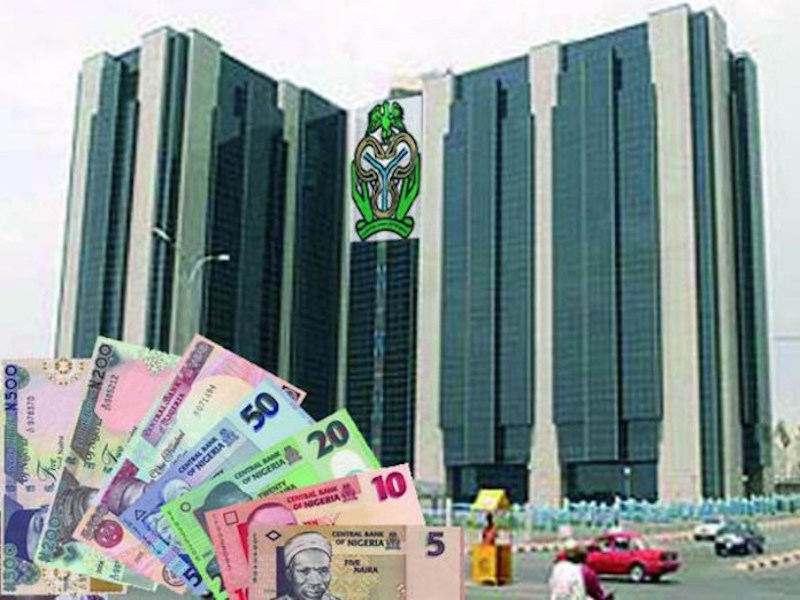
With a downward trajectory
in recent months, the Central Bank of Nigeria may have curtailed the
rising inflation, which had threatened the key macroeconomic conditions,
writes James Emejo
The consumer price index (CPI), which
gauges the rate of inflation, further dropped to 11.25 per cent
(year-on-year) in March 2019, compared to the 11.31 per cent recorded in
February.
The National Bureau of Statistics (NBS),
in its March CPI report noted that the 0.06 per cent decrease
in the
headline index was reflected in all the divisions that determine
inflation.
Core inflation for the month stood at
9.5 per cent, down by 0.3 per cent when compared with the 9.8 percent
recorded in February while the composite food index, stood at 13.45 per
cent compared to 13.47 per cent the previous month.
According to the statistical agency, the
urban inflation rate dropped to 11.54 per cent (year-on-year) in March,
compared to 11.59 per cent in February, while the rural inflation rate
also reduced to 10.99 per cent from 11.05 per cent.
On a month-on-month basis, the urban
index rose by 0.81 percent in March, up by 0.05 from 0.76 per cent
recorded in February while the rural index also rose by 0.77 per cent in
March, up by 0.06 per cent from the 0.71 per cent rate recorded in
February.
Specifically, the slow rise in the food
index was attributed to the muted increases in prices of bread and
cereals, meat, fish, potatoes, yam and other tubers, oils and fats, and
soft drinks, vegetables, and fruits.
On month-on-month basis, the food
sub-index increased by 0.88 per cent in March 2019, up by 0.06 per cent
points from 0.82 per cent recorded in February 2019.
According to the NBS, the average annual
rate of change of the food sub-index for the twelve-month period ending
March 2019 over the previous 12-month average was 13.42 per cent, 0.20
per cent points from the average annual rate of change recorded in
February 2019 (13.62) per cent.
However, on a month-on-month basis, the
core sub-index increased by 0.53 per cent in March, down by 0.12 per
cent when compared with 0.65 per cent recorded in February.
The highest increases were recorded in
prices of domestic and household services, tobacco, actual and imputed
rent for housing, dental, medical and hospital services, tobacco and
major household appliances.
It was not surprising that the decline
in headline index impacted positively on the prices of some consumer
items within the month.
For instance, the average price per
litre paid by consumers for National Household Kerosene decreased by
-0.49 per cent month-on-month and increased by 12.99 per cent
year-on-year to N303.94 in March from N305.44 in February.
According to the National Household
Kerosene Price Watch March 2018, states with the highest average price
per litre of kerosene were Anambra N329.09, Ebonyi N326.83, and Ondo
N326.67.
Those with the lowest average price per litre of kerosene were Gombe N255.38, Niger N278.02 and Kaduna N279.75.
Also, average price per gallon paid by
consumers for kerosene decreased by -1.56 per cent month-on-month and
increased by 26.25 per cent year-on-year to N1190.89 in March 2019 from
N1209.73 in February 2019.
Furthermore, the average price for the
refilling of a 5kg cylinder for Liquefied Petroleum Gas (cooking gas)
decreased by -0.16 per cent month-on-month and -1.25 per cent
year-on-year to N2,064.45 in March from N2,067.68 in February.
According to the Liquefied Petroleum Gas
(Cooking Gas) Price Watch, states with the highest average price for
the refilling of a 5kg cylinder for cooking gas include Bauchi
(N2,500.00), Cross River N2,400.00 and Adamawa N2,375.00 while those
with the lowest average price for the refilling of a 5kg cylinder for
cooking gas were Kaduna N1,740.17, Enugu N1,769.23 and Osun N1,785.29.
Essentially, the recent decline in
inflation has caused some excitement in the market especially the CBN
which had been battling to contain the rising prices and stabilise the
exchange rate.
Notably, inflation resumed its descent
in January 2019 when it dropped to 11.37 per cent from 11.44 per cent in
December in 2018.
The headline index further reduced to 11.31 per cent in February and 11.25 per cent in March.
One of the major concerns around high
inflation had been its benign effect on both monetary and fiscal policy
and the economy in general.
Writing in the European Journal of
Business and Management, on the “Assessment of the Effect of Inflation
on Nigeria’s Economic Growth: Vector Error Correction Model Approach”,
in their 2017 piece, Eze Onyebuchi Michael and Nweke Abraham Mbam of the
Department of Economics, Ebonyi State University, Abakaliki, had
further established that inflation affected Nigeria’s economic growth
negatively and insignificantly.
According to them: “Generally, high
inflation imposes welfare costs on a nation, hinders efficient
allocation of resources by affecting the role of changes in the relative
price level, and as well discourages investments and savings in an
economy as it creates unpredictable future prices.
“The situation also affects financial
development because it makes financial intermediation more costly, and
the poor are mostly affected because they rescind in holding financial
assets that provides a hedge against high inflation and decreases a
country’s international competitiveness by making exports more
expensive.
“ It also has negative effect on
payments balance, and reduces long-term growth of a country. Business
and households perform poorly during the period of high inflation.”
There is no gainsaying the fact that the
CBN had in recent times reeled out an array of intervention programmes
to tame inflation and restrict it to a single-digit target of between
six to nine per cent this year in order to stabilise exchange rate,
which had been under undue pressure from mainly oil price volatility in
recent times.
The apex bank’s efforts appeared to have
yielded fruits, by the recent consecutive monthly decline, eventually
allowing the bank a rare opportunity to tinker with the monetary policy
rate (interest rate) which was reduced by 50 basis points recently to
the excitement of the markets.
The adjustment in MPR finally came after
holding the rate at 14 per cent for about two years, largely due to
inflation as the former rate cannot go below the latter rate.
Nonetheless, analysts have expressed cautious optimism over the downward trajectory in inflation.
A credible source told THISDAY that
though the decline in the March index was a positive indication for the
economy, vulnerability of oil price shocks for an import dependent
economy such as Nigeria posed a challenge.
He said: “It’s positive news that the
trajectory of inflation has been heading downward consistently over the
last few months. Even MPC decision to reduce the MPR has not in any way
turned effective interest rate to negative which is positive as
portfolio investments will remain profitable to that extent.
“A signal for supporting growth is now
sent to the market by MPC and this will be further supported by reducing
inflation rate and improving foreign reserve to over $44 billion.
However, vulnerability of oil price shocks for an import dependent
economy like Nigeria implies that, any downward change in oil price will
easily put pressure on our foreign exchange reserve and further trigger
imported, cost push inflation.
“Walking the talk of ensuring economic
diversification and dealing with the fuel subsidy issue is the key to
sustainable growth and development of the economy.”
Also, commenting on the inflation
numbers, Research Analysts at FXTM, Lukman Otunuga, said it was a
favourable development, considering that there had been speculation of
increased government spending stoking inflationary pressure.
He said:“With consumer prices moderating
closer towards the Central Bank of Nigeria’s target band of six to nine
per cent, this may open the doors for the central bank to make a move
in the future.
“While it remains premature to speculate
on the possibility of another rate cut occurring anytime soon following
the surprise move in March, repeated signs of easing inflationary
pressures could prompt the CBN to cut rates again during the second half
of 2019.”
Also, analysts at Cordos Securities Limited, said there appeared to be no risk to the headline index for the rest of the year.
It noted that looking ahead, whilst the
still elevated diesel price should have ordinarily driven month-on-month
food inflation higher in April, they expect a ramp up of output in
April off season harvest by Nigerian farmers would cap higher transport
cost pass-through to food prices.
According to the investment analysts:
“That, together with a stronger naira, which continues to discourage
cross-border demand from neighbouring countries, informs our sanguine
view on food prices. Thus, we expect month-on-month food inflation to
moderate slightly in April.
“Elsewhere, despite the fuel scarcity
which greeted the month of April across key segments of the federation,
we remain largely confident of a subdued month-on-month core inflation
reading in the near term.”
However, analysts at Cowry Assets
Management Limited said: “We expect inflation rate to rise in the months
of April, May and June amid Easter and Ramadan festivities plus ongoing
planting season. Also, the eventual signing of the new minimum wage
bill will also push headline inflation higher going forward.”
Nonetheless, Michael and Mbam further
observed that “while government economic measures aimed at improving
public spending on both private and public investments leads to increase
real GDP, such measure does not lead to solving Nigeria’s inflation
problems.”
Rather, they urged government to
“reconsider the over reliance in its spending on public and private
investments in solving inflation problems in Nigeria, as there are other
factors responsible for high inflation in the economy.”
“Similarly, government is advised to pursue
vigorously the economic policies
targeted at improving economic growth because that will help to reduce
high inflation in the economy,” they added.
No comments :
Post a Comment