


DAR ES SALAAM: IN January 2023, President Samia Suluhu Hassan took a decisive step towards addressing long-standing concerns within Tanzania’s criminal justice system by establishing a Commission to review its performance.
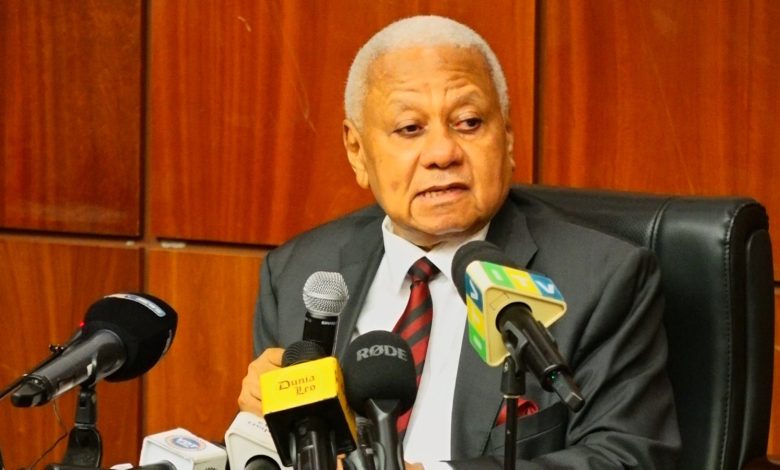
Chaired by the retired chief justice Mohamed Chande Othman, the Commission was tasked with examining systemic weaknesses and proposing reforms aimed at strengthening justice delivery, human rights protection and public trust.
Six months later, in July 2023, the Commission submitted its findings—marking the beginning of what has become a broader effort to recalibrate the relationship between state institutions and the citizens they serve.
The move came against the backdrop of persistent public complaints. Allegations of unlawful arrests, fabricated charges, prolonged case delays, prison overcrowding, restrictive bail conditions and misuse of authority had, over time, eroded confidence in the system.
These concerns were not merely administrative; they spoke to deeper questions about dignity, fairness and the rule of law in a society anchored in democratic governance.
The Commission’s recommendations were shaped by extensive consultations. Government officials, political actors, religious leaders, civil society organisations and ordinary citizens all contributed to a process that sought to capture both institutional realities and lived experiences.
Comparative insights from other jurisdictions were also considered, reflecting an awareness that justice reform is rarely an isolated endeavour. At the centre of the proposed reforms is a recognition that the criminal justice system operates as an interconnected chain.
The institutions involved—from the judiciary and police to prosecution authorities and anti-corruption agencies— must function coherently if justice is to be delivered effectively. The Commission also extended its scope to a wider network of public bodies whose roles intersect with enforcement and accountability.
While Tanzania’s constitution and legal framework provide for the protection of human rights, the challenge, as the Commission observed, lies in translating these guarantees into everyday practice.
Laws alone are insufficient if not matched by institutional conduct and public accountability. It is within this context that the Commission for Human Rights and Good Governance (CHRAGG) has assumed an expanded role.
As the country’s principal human rights body, CHRAGG has long been mandated to promote and protect fundamental rights. Following the Commission’s recommendations, it has now been entrusted with additional responsibilities linked directly to the oversight of criminal justice institutions.
ALSO READ: Dar reinforces stand on human rights protection
A key development has been the establishment, in 2025, of a dedicated unit within CHRAGG to handle complaints arising from the conduct of institutions in the criminal justice system.
Approved under a revised organisational structure, the unit is designed to provide a more accessible and structured channel through which citizens can raise concerns about human rights violations and failures in governance. Its functions extend beyond receiving complaints.
The unit is mandated to investigate alleged abuses, facilitate mediation where appropriate and monitor institutional practices to ensure compliance with established standards. In doing so, it introduces an additional layer of civilian oversight—something long advocated by human rights stakeholders.
The creation of this mechanism reflects a broader shift towards institutional accountability.
It signals an acknowledgement that public confidence in the justice system depends not only on legal reforms but also on the visibility of redress mechanisms and the responsiveness of institutions.
For Tanzania, the implementation of these recommendations represents more than administrative adjustment. It is part of a wider effort to strengthen governance structures and reinforce the social contract between the state and its citizens.
Whether these reforms will fully address the systemic challenges identified remains to be seen.
Yet the direction of travel is clear: a recognition that justice systems must evolve, and that public trust is both the foundation and the measure of their legitimacy.
The Author, Monica Mnanka, is Director of Public Education, Communication, Research and Documentation, and spokesperson for the Commission for Human Rights and Good Governance.
No comments :
Post a Comment