


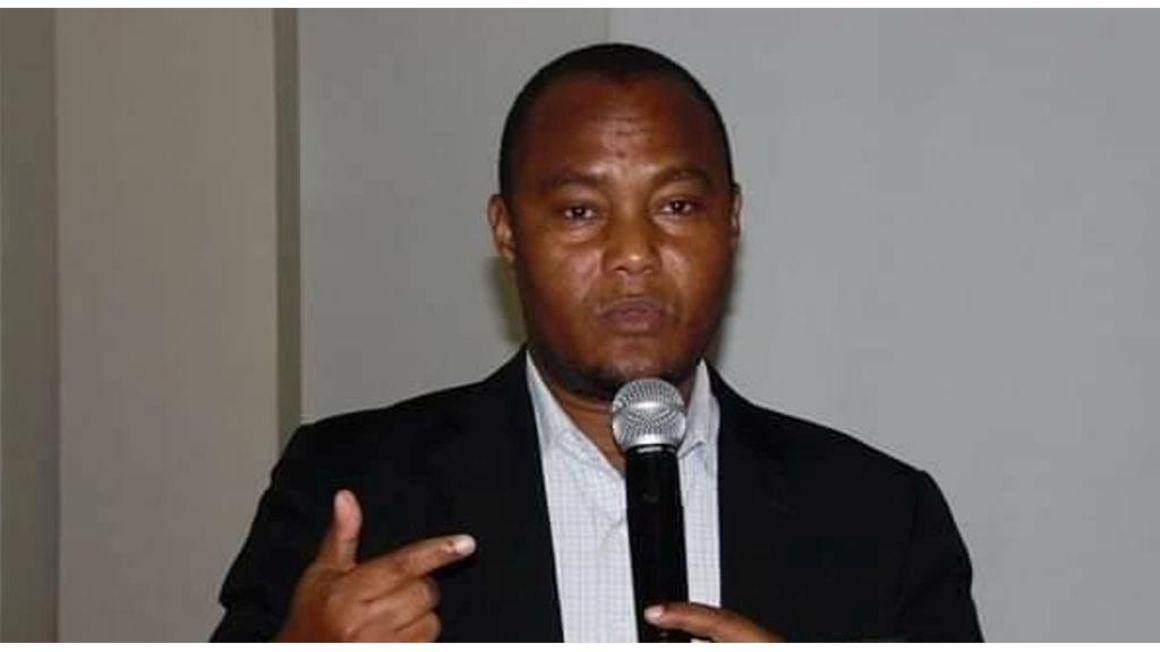
Question. What do our readers need to know about Tira?
Answer: Tira was established under the Insurance Act of 2009. It was established to,
among other things, regulate insurance activities in the country, protect insurance consumer rights, and maintain a fair market between the various service providers in the country. Currently, the market has 31 companies, over 100 insurance brokers, over 900 insurance agents, three loss adjusters and seven insurance actuarial. All of these players are supervised by us to ensure they perform their duties in accordance with the rules and regulations.Business is currently going well. There was a slight decrease during the Covid-19 and we anticipated medicine would go down but it went up. The situation is good. There is an increase especially in construction and health. With upcoming projects the industry will be better.
What are your plans for Tanzania’s insurance sub-sector?
A. It is my expectation to have a clean market that is free from fraud. This will increase public confidence. Regarding my team, our goal for the next two years is to double the number of insurance service providers. People should expect to see the sector undergoing major changes. The goal is to ensure education, awareness and insurance products reach every Tanzanian wherever they are.
To begin with, we will allow service providers to be called Direct Sales Agents. These are people who have graduated from college at various levels. We will allow them to sell insurance under the procedures that we will set. Through this channel, we expect to bring a lot of insurance sellers, especially in the periphery areas of the country.
Next month, we will also introduce a new product called Takaful Insurance which adheres to the principles of Sharia and is in great demand. We will also register web aggregators so that they can design digital platforms for selling insurance. We will also encourage companies to use digital platforms to spread insurance services. If we open these doors before the end of this year, we will have added a large number of service providers.
Can you expound more on Takaful?
Research into the demand for Takaful Insurance was conducted way back in 2012. It was conducted through financing from the World Bank financing and done by firms from Malaysia and Tanzania. The research established that demand for the product was high in both Tanzania Mainland and in the Isles. At least 90 percent of those who were involved in the research said they wished such a product could be made available in the market.
In 2014, Tira started preparations for regulations and we are now set to implement this almost immediately. Let me put it this way, this product complies with the principles of Sharia and anyone is allowed. Tira cannot bring a product that will discriminate against people. It is an economic instrument and not a religious tool.
Ultimately, what do you want to achieve with these plans?
Apart from protecting people and their properties against risks, the insurance sector is also focused on providing employment to young people. We have many young people who have graduated from college and are unemployed so we have decided to open this opportunity to provide them with jobs.
These two insurance distribution channels will provide an opportunity for young people who have studied IT and those who have studied insurance courses around Tanzania to sell insurance under certain agreements with insurance companies after obtaining permits from Tira.
What do you specifically seek to achieve with your plan to establish a clean market and free from fraud?
It is an open secret that fraud does exist in the insurance industry. There is fraud that is planned and also one that is made by customers in collaboration with staff through claiming of a charge that is not valid. There are also those that create fake disasters. We want to be very clean on this. We also want to be clean on delaying payment on general insurance claims. We will be really strict to ensure companies pay customers on time.
We also want to be clean on calculations of what should be paid in claims for a certain tragedy. We will soon issue new guidelines on compensation rates for third party injury and death. We will reveal the minimum rates for this category.
Currently, every company pays the rates it wants. Some pay higher and others pay less. Now we want to have a valid rate. Through this, insurance companies will compete due to the high rate of payment. In these areas, there are a large number of complaints from the public. So we want to increase trust and respect. I want to see the sector profitable so it can attract investors to come and invest in it.
On what we will do in order to control fraud, well, we will soon be issuing a new circular. Those who are fired for fraud will be on record once they stay on the database and they will later be identified and action will be taken. We will also introduce a digital platform that we will share with service providers. For example, if vehicle ‘A’ got damaged, every company can see and thus no duplication.
Maybe I should tell you why we need to control fraud. Insurance money should stay in the country’s economic system. If you take it away, you destabilise the economy and the industry. I will not accept this. We will make sure we control those who bring fake documents.
After the establishment of the bancassurance there have been complaints from insurance brokers who claim that banks have come to take their customers.
How do you ensure fairness exists and everyone benefits from the market?
The bancassurance idea was good. We started it in 2017 and we got the endorsement in 2019. We want people who go for bank services to be able to get insurance services as well. We have been very successful in that area because during these few years, we have been able to register more than 15 banks, a good achievement indeed.
But there is one thing that has not worked well and we will fix it quickly. We expect the banks to do a very big retail business. We have taken statistics and we have realized that most of the bank premiums do not come from retail business or individual policies. It defeats the idea of bancassurance. We were expecting to see life insurance increasing because the aim was to attract mostly individuals instead of corporates or groups that had already existed and were being promoted. We wanted to see people who have not been offered insurance before getting such services from banks. What we are emphasizing now is that banks should focus on selling insurance to those who have never got such services before and acknowledge those who have already received insurance services from brokers.
The government’s intention was to sell insurance through the banks’ branch network. We are going to correct this. We will put in place a mechanism by which banks will have more incentives to sell insurance for retail. We have also noted that there are complaints in the distribution of these businesses. Each banks is allowed to work with 10 insurers but in the execution stage, we have seen that banks have been doing tendering and selecting five or six companies that are big and leaving those small ones with no business. This will also have to be corrected.
I will meet with bancassurance players on March 10. I have already held discussions with brokers.
Currently there is no provision of the law that compels public building owners or facilities that attract lots of people [such as football ground or markets] to pay compensation to people who have been injured as a result of a disaster that may occur within those buildings. Is there any plan to make this mandatory?
We continue to urge the government on full implementation of the National Insurance Policy in order to achieve just that. In that document, there is a feature that we recommend that it should be mandatory to get public liability cover on buildings such as schools, football stadia, markets and all areas that bring lots of people to be insured in case of disaster.
We are looking into this matter and recently, the government told us to make some minor adjustments to some aspects of the policy and later other procedures will continue for further decisions. But at the moment, we are encouraging insurance companies to prepare small products for small businesses and we have already received several company products.
What do you have to tell our readers about Tanzania’s reinsurance market?
It is an area that needs huge capital but our plan is to make Tanzania a hub of reinsurance in East Africa. We now have two companies: Tanre and Grandre. We have also received an application from Continentalre and we are working on it. The good news is that we have the full support of the ministry of Finance, which has given us a go ahead to establish a financing option to share with the capital market to see what instruments we can create that will help boost retention and insurance in this country.
The research process has already begun and in collaboration with the capital market we can have a tool that instead of relying on reinsurance we can get funds from the capital market.
No comments :
Post a Comment