



Summary
Dar es Salaam. Electronic Tax Stamps (ETS) are a viable means of levelling the playing field for manufacturers, thanks to their capacity of tracking and tracing manufactured products
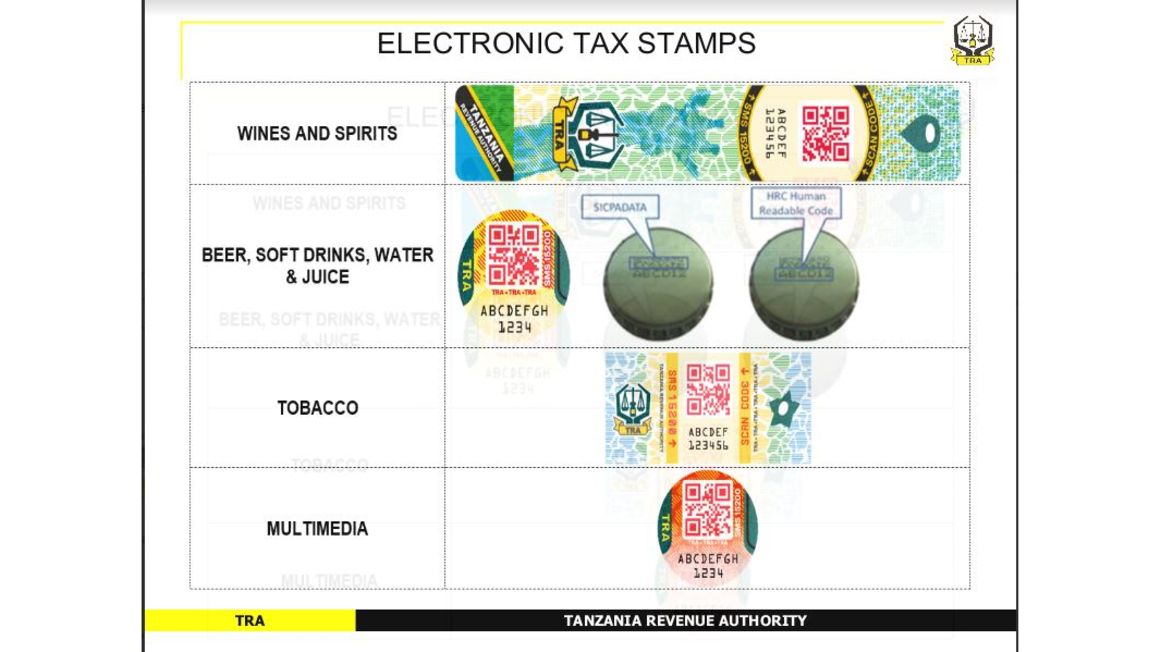
With ETS’ -- which the government adopted in January 2019 -- both the taxman and the consumer can easily and effectively tell whether the stamp fixed on a product is original or fake.
“The tracking and tracing security features that are embedded in the ETS’ make it easy for us to tell which one is fake and which one is original,” said the ETS project manager at Tanzania Revenue Authority (TRA), Mr Innocent Minja.
He said through a mobile app, which would be launched at an opportune time, every individual will also be able to track and trace the authenticity of a product before consuming.
This is contrary to the former paper stamps which were difficult to tell between the original and the fake one.
“So in essence, these stamps are there to protect genuine manufacturers from unscrupulous ones,” he said.
It was against that note that data from TRA show that there had been a significant rise in the number of manufacturers whose products are affixed with ETS’ during the past two years or so.
“The number of manufacturers of beer, spirits and wines has risen significantly from only 57 before the introduction of ETs’ to 272 as of August this year….In short, these stamps help to expand the tax base,” said Mr Minja.
In Tanzania, the government announced plans to adopt the Electronic Tax Stamps (ETS) system in June 2018 and the first phase was conducted on January 15, 2019 whereby stamps were installed on companies that produce beer, wine and spirits.
Phase two of the project was rolled out on August 1, 2019 when ETS’ were stamped on sweetened flavored water and other non-alcoholic beverages, like energy and malt drinks and soda.
The third phase, which involved enrolling electronic stamps on fruit juices (including grape must), vegetable juices (under Heading 20.09), and bottled drinking water, was conducted November 1, 2020.
ETS sends real time production data to the government, thus giving it a chance to ascertain the amount to collect in excise duty, VAT and Income Tax.
This, according to Mr Minja, is also a blessing to both the government and manufacturers because it removes the need for TRA officials and a manufacturing company or an importer to go through the hassle of sitting down and discussing the right amount to be paid in tax.
“In short, you cannot hear that a TRA official has deliberately inflated the amount that one is to pay in tax for all the products that carry ETS’. It also means that the taxman will not need to be working only on the production data as furnished by the manufacturer,” he said.
Since the adoption of ETS’, excise duty collections have risen 60 percent if the three years prior to the rollout of ETS’ on beer, wines and spirits is compared to an almost similar period after the rollout.
No comments :
Post a Comment