


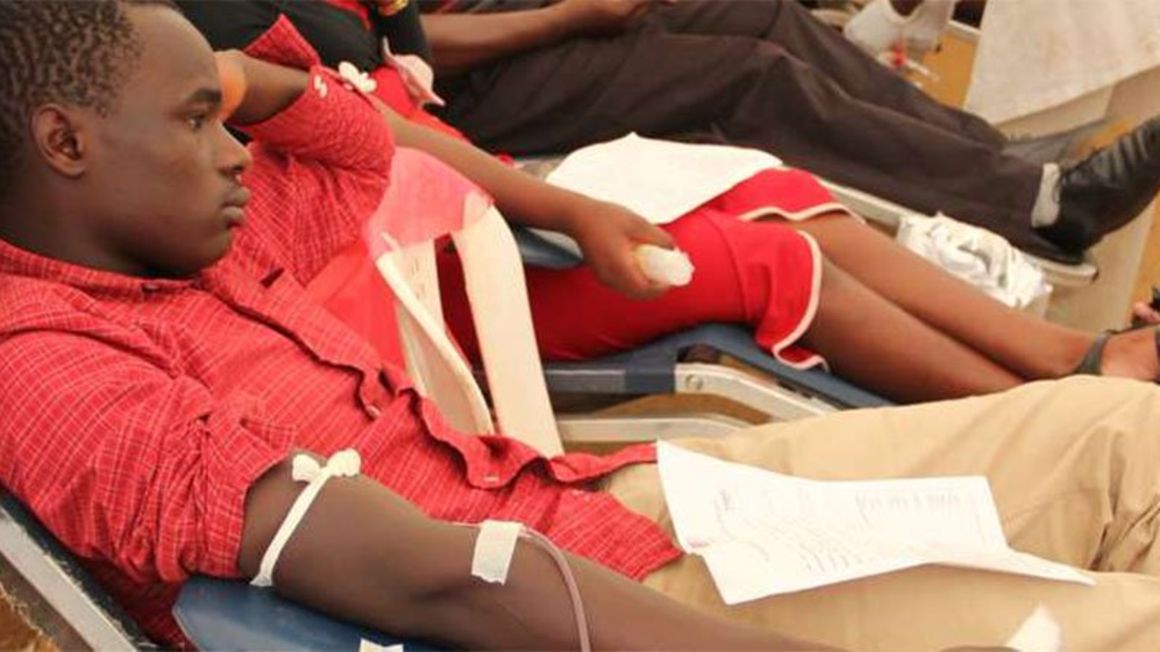
Volunteers donating blood at a past blood donation drive. FILE PHOTO | NMG
Imagine, your wife or sister leaves for hospital to deliver. Joy turns to despair as you watch, helplessly, as she dies due to maternal bleeding. Imagine, your partner leaves for work and doesn’t return. He was involved in a road accident.
You arrive at hospital, too late to say goodbye, to learn that he died due to loss of blood. Imagine your parent is admitted to hospital due to cancer and requires blood and blood components to survive. However, there is insufficient blood in the hospitals and components are not available.
You may only imagine these scenarios, but many others in Africa are living them, far too frequently, and they could be prevented with a safe, adequate blood supply.
Blood is an indispensable component of any health care delivery system in the world. Globally, the demand for blood has outweighed its supply and the challenge is even greater in sub-Saharan Africa where access to safe, adequate blood supply is low.
The World Health Organisation includes blood and blood components on its essential medicine list but very few countries across the African continent have prioritised blood supply in policy and health discussions.
The challenge has been exacerbated by the lack of sufficient funding to manage blood services and cultural norms against blood donation by many Africans.
The highest proportion of blood transfusion in Africa is given to children with severe anaemia resulting from malaria and malnutrition, followed by women with pregnancy-related bleeding. There is also a high mortality rate due to traffic accidents.
One of the most important strategies to address these perennial shortages is to form partnerships across the public and private sectors to generate innovative solutions.
For far too long, many African countries have relied on donor funding to manage their blood services. The result has been a weakened blood transfusion capability due to lack of sustainable resources to manage blood services.
The Coalition of Blood for Africa (CoBA) is one such organisation that was set up this year to address the challenges of blood services in Africa. The coalition brings together the public and private sectors.
In sub-Saharan Africa, approximately 70 percent of blood collections are from students in public schools and blood drives at local markets, places of worship and civic centers.
In response to Covid-19, many governments in Africa shut schools and restricted social gatherings for an indeterminate period. As a result, blood banks are collecting up to 80 percent fewer donations, putting thousands of new mothers, cancer patients, children with sickle cell disease and others who need life-saving blood transfusions at risk.
Let’s ensure the right mechanisms are in place to collect blood, then encouraging voluntary, non-remunerated blood donation.
Governments should invest in technologies that can produce blood products for the treatment of various illnesses such as cancer.
No comments :
Post a Comment