How billions worth of Covid-19 funds were stolen in Africa
By Alex Ndegwa
What you need to know:
It is impossible to quantify how much has been lost.
The
cases exposed so far of theft in procurement of personal protective
equipment and diversion of aid money meant for vulnerable
people highlight the possible plunder of billions of dollars.
Prices of medical supplies inflated by nearly 1,000 percent, relief
payments to illegal beneficiaries and powerful individuals rigging
lucrative tenders are ways in which Covid-19 funds are being looted in
Africa.
It is impossible to quantify how much has been lost, but the cases
exposed so far of theft in procurement of personal protective equipment
(PPE) and diversion of aid money meant for vulnerable people highlight
the possible plunder of billions of dollars.
In South Africa, the auditor-general has uncovered massive corruption in the spending of 500 billion rand ($26bn)Covid-19
relief funds and several suppliers have pleaded guilty to inflating
prices of goods such as face masks by up to 748 percent.
Kenya, Zimbabwe, Uganda, Somalia and Nigeria are other countries
where cases of graft lords looting Covid-19 funds are public - but it is
feared many more countries will be exposed as aggressive scrutiny and
more information comes to light.
In an example of brazen profiteering, a South African pharmaceutical retailer, LevTrade
International was found guilty of excessive pricing after inflating the
price of a box of 20 respiratory masks from R139 on February 14 to R310
on March 23.
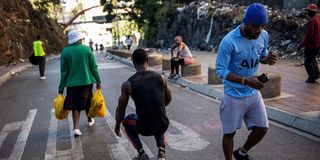
People train on a street in Johannesburg, South Africa in May 2020.
Michele Spatari | AFP
Yet another, Dis-Chem Pharmacies Ltd, inflated the price for a box of
50-piece blue surgical face mask by 261 percent as desperate customers
scrambled for the protection against corona virus.
Dis-Chem was selling a unit for R43.47 in February, but it increased
the price to R156.95 before taxes in March, when the country confirmed a
case of Covid-19.
Reacting to numerous complaints about exorbitant prices for face
masks, the Competition Commission on July 7 referred Dis-Chem, a
national wholesale distributor and retailer of pharmaceutical products,
to the Competition Tribunal for prosecution.
The tribunal on July 22 found Dis-Chem guilty of charging excessive
prices for surgical face masks and fined the firm R1.2 million.
“… the exploitative conduct of Dis-Chem of excessive pricing was
particularly reprehensible. It exploited customers desperate to lay
their hands on an essential item in the fight against a pandemic of
global proportions, with potential consequences for consumers and public
health… we consider its conduct was not only exploitative of vulnerable
consumers, especially the poor, but was especially egregious,” the
Tribunal ruled according to a statement posted on the commission’s
website.
A fine
On August 20, LevTrade agreed to pay a fine of R50,000 along with
separate contributions to the Solidarity Fund and a children’s home.
Other penalties in the settlement agreement included a contribution
of R10,000 to the Solidarity Fund and donation of surgical face masks
and hand sanitisers valued at R25,000 to the Johannesburg Children’s
Home.
The firm was also forced to reduce its gross profit margin on its N95
face masks to an agreed maximum percentage for the duration of the
pandemic.
In Nigeria, an analysis by Dataphyte of data from the Open Treasury Portal exposed the spending ofN5,600 ($15) on a 500ml bottle of hand sanitiser.
The Federal Road Safety Commission, an agency of the federal
government, paid ₦5.6 million ($15,000) for the entire procurement deal,
sparking protests.
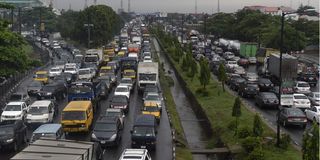
Motorists queue in a chaotic traffic gridlock in Lagos, Nigeria in 2019.
Pius Utomi Ekpei | AFP
It is similar claims of price inflation that have caused public outrage in Kenya and triggered an investigation.
Another two separate investigations into the alleged theft of
consignments of PPE from Alibaba founder Jack Ma and the Chinese
Government are ongoing.
The Kenya Medical Supplies Authority (Kemsa) is fighting accusations
it gave out multi-billion shilling tenders at inflated prices and it’s
now stuck with costly supplies whose market value has fallen
drastically.
One firm caught up in the saga is Kilig Ltd, which in January had
secured a Sh4 billion ($37 million) offer to supply hundreds of
thousands of PPEs. Each kit was to be supplied at an inflated cost of
Sh9,000 ($83) from the then market price of Sh4,500 ($41).
The complete kit includes N95 masks, body suits, goggles, waterproof
shoe covers and gloves. The firm was to supply 450,000 of each item, but
Kemsa later cancelled the deal following a falling out.
Another firm, Shop ‘N’ Buy Ltd, that was just four months old, was
handed a Sh970 million ($8.9 million) contract to supply 100,000 PPE
kits, each at an approximate price of Sh9,000 ($83), earning it Sh900
million. The company was also allowed to supply another 100,000 pieces
of KN95 masks at Sh700 ($7) apiece.
Shop ‘N’ Buy owner, James Kipketer Chululey, however, defended the contract, explaining his company did nothing wrong.
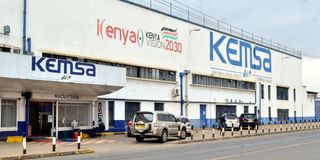
Kemsa.
Nation Media Group
Mr Kipketer told the Nation last month the prices were high
at the time because he had flown in most of the items, paying excessive
cargo fees of about Sh2,000 ($19) for every kilogramme of import.
“We quoted the Sh9,000 ($83) per kit because we were importing by air
and a kilo of any import was going for about 20 dollars in March,” he
said.
“Today, it might look inflated, but at that time, that was the price.
Kemsa is now at a loss because the prices of some of those kits have
dropped since we are now importing by sea.”
These cases highlight how the pandemic has become a gravy train for suppliers.
But in some instances, there were cases of outright theft of public
funds at the expense of health workers, while the general population was
unable to access the promised relief.
South Africa's auditor general this week lifted the lid on the extent
of the looting of the nation's Covid-19 relief fund through overpricing
and potential fraud.
In a briefing onSeptember 3, Kimi Makwetu reported the audit on the spending of 500 billion rand ($26bn) had uncovered "frightening findings”.
In some cases, PPE was bought for five times more than the price the
national treasury had advised. Some of the complaints relate to price
increases of 1,000 percent and fraudulent relief payments to illegal
beneficiaries.
'Further investigation'
The BBC reports the audit also highlighted 30,000 relief grants which "require further investigation".
"A lot of the effort that we put into this on the detection side of
things has revealed a number of frightening findings that require to be
followed up very quickly so that there is no significant passage of time
before the required actions are implemented," Mr Makwetu was quoted by
BBC saying at a press conference on Wednesday.
The funds were meant to assist vulnerable households with relief
food, unemployment grants, support to small businesses and farmers and
to also procure personal protective equipment.
In neighbouring Zimbabwe, President Emmerson Mnangagwa sacked his
Health Minister Obediah Moyo on accusations of seeking to enrich himself
through a lucrative tender for medical equipment.
Mr Moyo is battling corruption charges related to a $20 million
contract awarded to a Hungary-registered firm, allegedly without going
through proper processes.
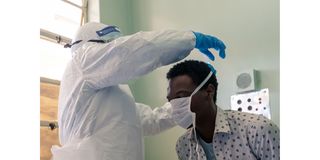
A medical staff member wearing protective equipment places a face
mask on a mock patient at the Wilkins Infectious Diseases Hospital in
Harare, Zimbabwe in March 2020, as they demonstrate their state of
preparedness to treat Covid-19.
Jekesai Njikizana | AFP
In Uganda, four top officials in the office of Prime Minister
Ruhakana Rugunda, tasked with overseeing a programme to provide relief
food for the most vulnerable, ran into trouble with authorities on
accusations of graft. They were arrested on claims they occasioned the
government losses in excess of $528,000.
In Somalia, a court this month jailed four government officials for
the theft of public funds meant for Covid-19 emergency response.
Although court documents did not reveal how much each of them stole,
in April the Ministry of Health had questioned spending of between
$42,000 and $45,000.
World Health Organization Director-General Tedros Adhanom Ghebreyesus has equated corruption in procurement of PPE to murder.
“Any level or any type of corruption is unacceptable. However,
corruption related to PPE … for me it is actually a murder. Because, if
health workers work without PPE, we are risking their lives and that
also risks the lives of the people they serve. So it is criminal and it
is a murder,” Dr Ghebreyesus said on August 22.
By yesterday, Africa had 1,066,906 confirmed cases.
Globally, 25,884,895Covid-19 cases have been recorded including 859,130 deaths reported to WHO.
It had been feared that with trillions of dollars flooding in to help
nations combat the pandemic, corruption would thrive, especially given
the emergency nature of the procurement.
The scale of the plunder of Covid-19 funds may not be immediately
clear, but past estimates of graft in the health sector offer a clue.
“The health sector is particularly vulnerable to corruption; it is
estimated that at least US$455 billion of the US$7.35 trillion spent on
healthcare per year is lost to fraud and corruption,” reports
Transparency International (TI).
“With a huge influx of cash flows and medical supply shortages,
humanitarian emergencies create fertile ground for fraud and
corruption,” says a TI paper on anti-corruption strategies for
development agencies during the Covid-19 pandemic.
While the jury is still out on how much will be looted in the fight
against the Covid-19 pandemic, the few reports so far cast gloom.
These are scams
In late May, the US Federal Trade Commission announced more than
52,000 reports of Covid-19-related scams since the beginning of 2020 had
been filed, resulting in almost $39 million in losses. The average
consumer lost $470.
The US Department of the Treasury has even put out an alert about Covid-19 scams.
“If you receive calls, emails, or other communications claiming to be
from the Treasury Department and offering Covid-19 related grants or
stimulus payments in exchange for personal financial information, or an
advance fee, or charge of any kind, including the purchase of gift
cards, please do not respond. These are scams,” reads the notice
published on the department’s website.
Audits following past global crises have exposed the corruption that stalks emergency relief aid in times of catastrophe.
TI, on its website, reports that the International Federation of Red
Cross and Red Crescent Societies estimated that it lost more than $6
million due to corruption and fraud during its Ebola operations from
2014 to 2016.
An independent audit by the Global Fund, and later the Associated
Press in 2011, revealed that US$34 million of its grants may have been
misused in Djibouti, Mali, Mauritania and Zambia.
Richer nations
And the fraud is not restricted to poor countries.
The US Government Accountability Office reported about US$1 billion
of payments made by the US Federal Emergency Management Agency during
and after the hurricanes Katrina and Rita was improperly distributed and
potentially fraudulently obtained.
“Corruption in humanitarian assistance results in a reduced quantity
and quality of aid reaching the targeted beneficiaries, and, as a
result, may potentially prolong humanitarian crises,” TI cautions.
In a publication on corruption and the Covid-19 pandemic, the World
Justice Project (WJP) warns coronavirus presents a “perfect storm” for
graft.
“Massive resources are being rushed to address both the health crisis
and its economic side effects, while procurement oversight and
enforcement efforts are relaxed or diminished by the exigencies of the
crisis and social distancing,” reports the WJP on its website.
“The more funds that are distributed, the more likely it is that
people are going to try to steal that money,” VOA quoted Jeff Cortese, a
former acting chief of the FBI’s public corruption unit saying in a
report published on May 5.
Enormous amounts
And the amounts being channelled to fight the pandemic are enormous.
The Global Fund, the largest multilateral investor in grants for
health systems worldwide, has offered US$1 billion to help countries
fight Covid-19, mitigate the impacts on lifesaving HIV, TB and malaria
programmes, and prevent fragile health systems from being overwhelmed.
By July, the initial allocation of US$500 million for emergency
funding had been disbursed to 72 countries through the Covid-19 Response
Mechanism.
Online site Devex - International Development News Comment Policy -
has tracked more than 96 grants worth $2.1 billion as well as 35 loans
worth $22 billion in West and Central Africa since January.
The US government has pledged over $775 million to tackle Covid-19 worldwide.
The Department of State and USAid have announced $123 million to $140
million commitments to countries in West and Central Africa.
Regional efforts
They are also providing $10 million for regional efforts in the Sahel and in West Africa.
Nigeria and the Democratic Republic of the Congo are the countries
receiving the highest amounts of funding, with $30 million and $26
million respectively, in the West and Central Africa regions.
The European Union’s contribution to the Covid-19 response in sub-Saharan Africa is more than $2 billion.
In West and Central Africa, Nigeria and Uganda are the main recipients, with almost $54 million and $32 million respectively.
The International Monetary Fund has channelled an estimated $6
billion to at least 13 low-income countries in the West and Central
African region.
The biggest IMF financing package so far is $3.4 billion for Nigeria.
Most of the donor funds are being channelled to health, social, and
economic ministries on the frontline of the national response.




No comments :
Post a Comment