


File | Nation Media Group

What you need to know:
- The whitest lie in the whole thing was the attempt at making us believe that the transaction with the equipment suppliers was a leasing arrangement.
- Most leasing contracts provide for the means and mechanisms for monitoring and tracking of use of the equipment.
- This scandal should not dissuade the government from adopting leasing as a model.
I read through the report and findings of
Senate Committee on Health on the Sh50 billion medical equipment scandal
and here is what I find revealing in it: We were dealing with greedy
merchants whose only interest was to dump expensive equipment on county
governments and it did not matter to them whether or not the taxpayer
got value for money from the equipment.
But the whitest lie in the whole thing was the
attempt at making us believe that the transaction with the equipment
suppliers was a leasing arrangement. We all know that what you pay for
in a lease is use of the equipment. Instead of outright purchase of the
equipment, you enter into an arrangement where you pay for use during a
specified time. Even installation, maintenance and replacement of parts
is supposed to the responsibility of lessor.
Most leasing contracts provide for the means
and mechanisms for monitoring and tracking of use of the equipment. The
lessor must be able to monitor its use. If it is a motor vehicle, the
lessor is the one to decide when it is released to him for scheduled
service and maintenance.
During a visit to the Netherlands, the Senate
committee discovered that a machine that was supposed to be supplied to a
hospital in Meru was still in a store four years after the leasing
programme had been commenced.
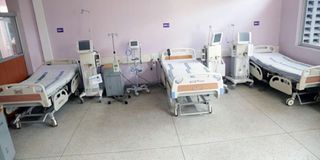
In Hola, it found that theatre and radiology
equipment dumped there could not be put to use because the hospitals
neither had reliable electricity nor trained staff. In Chuka,
installation of equipment was still going on, four years later.
So why have we been paying billions of
shillings to these contractors every financial year when some of the
equipment had not even arrived in the country?
Clearly, these contracts were negotiated to
allow payments to go on regardless of whether or not the expensive
equipment was being used by the taxpayer. The contract provided for
binding lease terms requiring automatic quarterly payments to the owners
of the equipment. And the payments were made straight out of the
Consolidated Fund, without first being moved to the County Revenue Fund
as stipulated by both the Constitution and the Public Finance Management
Act, thus making it difficult to follow the money trail.
The counties were left grossly exposed, forced
to accept equipment under terms negotiated without their involvement
and paid for without reference to them.
Supporter of leasing
In Laikipia, the committee found that X-ray
and theatre equipment procured and supplied to hospitals by the national
government before the devolved unit kicked in had to be removed to
create space for that from the lease programme.
This scandal should not dissuade the
government from adopting leasing as a model. I remain a supporter of
leasing as an option, especially when you are purchasing assets that
depreciate quickly.
Negotiated transparently and competently,
leasing allows you to reduce the cost of acquiring assets that
depreciate. Leasing allows you to spread the cost of acquiring expensive
equipment over its useful economic life. The government has no business
owning expensive gadgets that it is incapable of maintaining.
Negotiated well, leasing allows you to catch
up with technology because the manufacturer is obliged to upgrade the
equipment in line with emerging technologies.
As I read the report, I remembered similar
scandals — like the mobile clinics one of last year. The project to
purchase those contraptions was poorly conceived. That project had
little or no economic justification beyond creating rent-seeking
opportunities for public officials and the suppliers of the equipment.
Is it not the height of impunity that Afya
House paid a whopping Sh800 million to purchase and import 100 of these
portable clinics before doing something as rudimentary as hiring the
staff to man the facilities? There were no plans on when and how the
equipment was to be installed.
The agreement between the ministry and the
vendors of the equipment — Messrs Estama Investments Ltd — did not
provide details such as deadlines for delivery, quality and quantity
inspections and payment conditions.
Why is it that we always get things wrong when
it comes to purchasing equipment? Are we cursed? But then, wily
merchants and their allies within the government have been dumping
expensive equipment on the taxpayer.
I recently read somewhere how Nigeria has
improved delivery of public health services by concessioning hospital to
equipment manufacturers.
We ended up in the big mess of the medical
equipment leasing transaction because somebody decided to drop the
original idea of adopting concessioning as public hospitals have done in
Nigeria.
That is where the rain started beating us.
jaindikisero@gmail.com.
No comments :
Post a Comment