


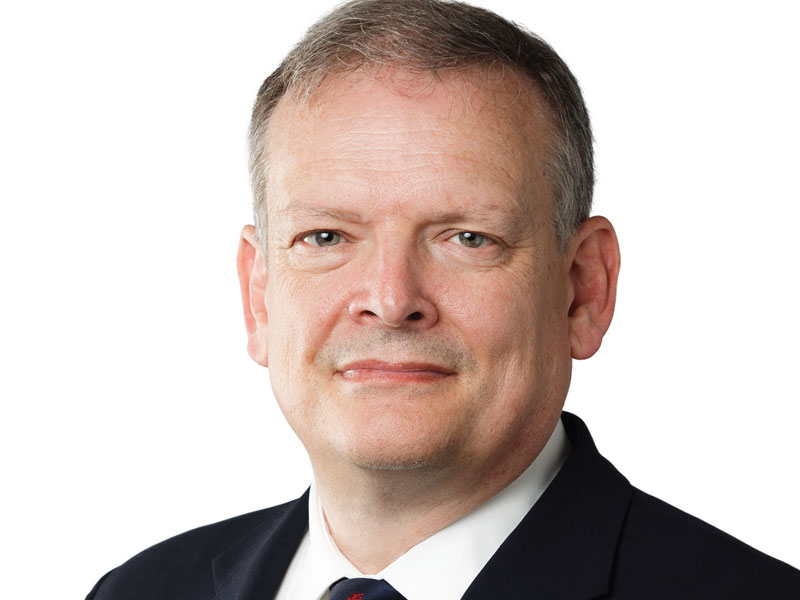
 Andrew Skipper
Andrew Skipper
The strength of the rule of law in a
country ranks among the top three considerations when multinationals
make decisions about where to locate foreign direct investment – above
considerations such as the cost of doing business and access to national
and regional markets.
In its simplest form, the rule of law
means that, “no one is above the law”. It is the foundation for the
development of peaceful, equitable and prosperous societies.
For the rule of law to be effective,
there must be: Equality under the law; transparency of law; an
independent judiciary; and access to legal remedy*.
Where investors experience rule of law
challenges – particularly political instability, arbitrary or
discriminatory treatment and intellectual property violations – it also
revealed that they are liable to reduce or even withdraw investment.
These are some of the findings of “Risk
and Return: Foreign Direct Investment and the Rule of Law”, based on a
survey of over 300 senior decision makers at Forbes 2000 companies with
global annual revenues of at least US$1 billion.
Hogan Lovells alongside the Bingham
Centre for the Rule of Law and the Investment Treaty Forum at BICIL, the
Economist Intelligence Unit and the British Institute of International
Comparative Law published Risk and Return in 2015.
The foundational values of South
Africa’s constitutional democracy include human dignity, equality,
freedom, transparency and accountability, and the rule of law.
However, the latest Rule of Law Index,
released by The World Justice Project (WJP), which measures rule of law
adherence, shows that over the last year South Africa dropped three
positions for overall rule of law performance to 44 out of 126
countries.
The new WJP Rule of Law Index scores
show that more countries declined than improved in overall rule of law
performance for the second year in a row, continuing a negative slide
toward weaker rule of law around the world.
The top three overall performers were
Denmark, Norway, and Finland; the bottom three were the Democratic
Republic of the Congo, Cambodia, and Venezuela. These top performing
countries are generally prosperous and peaceful, in stark contrast to
the bottom performers.
The Business for the Rule of Law
Framework from the UN Global Compact seeks to engage businesses to
support the building and strengthening of legal frameworks and
accountable institutions. It acknowledges that all stakeholders,
including government and business, must recognise that there is a
compelling business case for respecting and supporting the rule of law.
Rule of Law 2030 builds on the empirical
research presented in Risk and Return and takes on the challenge set
out in the Sustainable Development Goals (SDGs) and UN Global Compact in
the Business for Rule of Law Framework by forming strategic,
sustainable partnerships with business and government to strengthen the
rule of law.
The Framework quotes the Risk and Return in support of its conclusion
that: “For businesses, an operating environment which is governed by
the rule of law, provides the basis for commercial certainty and creates
the foundation for long term investment and growth, and sustainable
development for all”.
Skipper, is a partner and head of Africa at Hogan Lovells
No comments :
Post a Comment