


 By Duncan Mlanjira
Malawians
have reacted very angrily to the report by US-based CNN which described
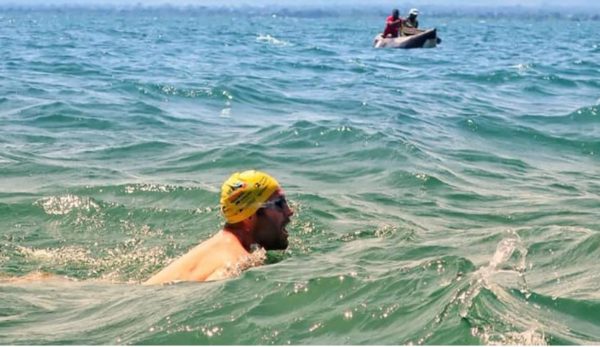
Lake Malawi as crocodile-infested in her report that Martin Hobbs swam
across its breath for 54 days in a row to
set two world records and
raise money for the Smile Foundation.
Entitled 'He swam
for 54 days across crocodile-infested Lake Malawi to break two world
records', Malawians say this is a distortion of facts because crocodiles
are very rare on Lake Malawi.
In his post on
Facebook, Onjezani Kenani has asked the Ministry of Tourism to formally
protest to CNN over this allegation and that it should retract the story
and must publish a full and unconditional apology.
According to the
CNN report, Martin Hobbs had never swum a mile before but this week, he
cemented a world record by swimming 361 miles -- the full length of Lake
Malawi, setting the record longest solo swim in a lake and became the
first person to swim the entirety ofLake Malawi after swimming for 54
days in a row.
"The South African
swimmer started his athletic career as a competitive off-road biker and
marathoner, but after fracturing a disk in his back, he was told he
could no longer ride a bike or run. Swimming was the only endurance
sport left.
"The open water
gave him a way to come back from his devastating injury and also gave
him motivation to embark on a new adventure.
He is quoted as
saying: "I've always wanted to do an African adventure and never got
around to it. I didn't want to be buried one day and be known as the guy
who worked very hard and that's it. It's nice to leave a legacy
behind."
The CNN report
attributes Hobbs as technically breaking the Guinness World Record over
this feat on Lake Malawi that spans the entire coast of the eastern
African nation.
The report says the Lake is known for being home to deadly crocodiles, hippos and mosquitoes.
But Kenani
responded by saying: "Dear @CNN @cnni @cnnbrk. This is fake news, there
are no crocodiles in Lake Malawi and you must apologize. Just because it
is an African Lake you couldn't resist being racist and decided to
brand it as a "crocodile-infested". You must retract this article and
apologise to Malawians."
In her reaction,
Beatrice Mkwaila said: "If it was infested how did he last 54 days then"
while John Emma Kachere said he has lived in Nkhata Bay along the
shores of the beautiful lake for almost his entire life in which he has
swam and fished in that lake for a long time and yet, never has he ever
seen a crocodile or heard of an attack by one.
"This line of
reporting is unacceptable and uncalled for. It is totally infuriating
that these giant media institutions always have a knack of displaying
Africa in a negative light! This story needs to be taken off the
internet," Kachere said.
Franciwell Phiri
said: "It is a very bad image portrayed by people who have never been to
LakeMalawi. People who don't even understand the environment in which
crocodiles live and thrive. Such people must first crosscheck with
people who have knowledge."
Lily Bertha said:
"I was raised on the lake village but never heard of a crocodile attack
even up until now" to which Reena Purshotam replied: "[perhaps] not not
in your village, Lily Bertha, because generally there are deeper waters
up north. Monkey Bay has its fair share of crocs but it is not the whole
lake."
Former Miss Malawi,
Blandina Khondowe agreed, saying this is "a very disproportional
headline. Coming from a reputable news source this is damaging to the
image of Malawi. Our Lake is the centre piece ofMalawi Tourism. CNN must
provide factual evidence otherwise they must retract the story. And by
the way, how did the swimmer survive in a crocodile infested Lake.
Rubbish!"
Tobias Kumwenda
said: "No wonder we were fed lies that a Mzungu discovered Lake
Malawiwhile the indigenous were living along the same areas for ages."
Meanwhile, the CNN
report says Hobbs used the Herculean swim as a way to raise money for
the Smile Foundation, a South African charity that helps children with
cleft palates and other facial deformities.
No comments :
Post a Comment