


Dapo Adekunle
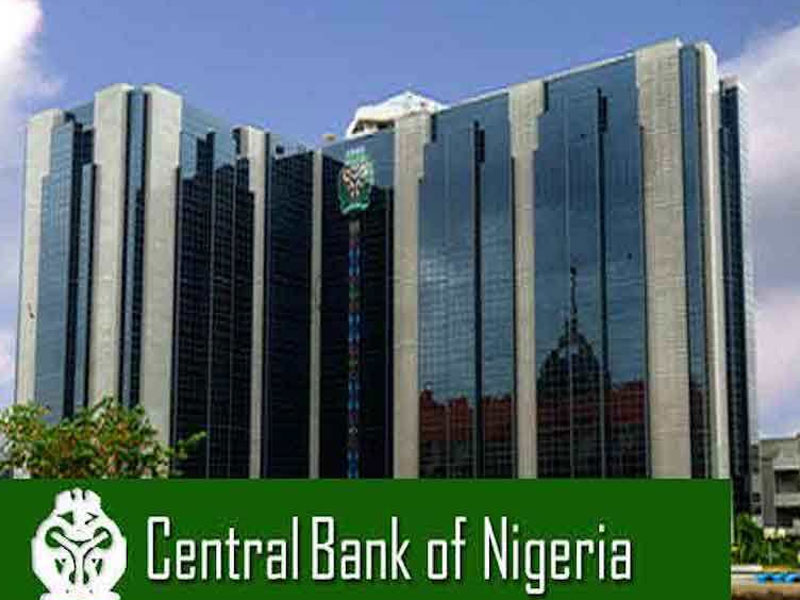
Between the end of 2014 and the first quarter of 2017, the job of heading the Central Bank of Nigeria (CBN) was not an enviable one. Nigeria was faced with the harshest economic realities which culminated in its worst recession and the common man on the street could only ask – and reasonably so – what the financial regulators were doing to restore the battered economy.
Between the end of 2014 and the first quarter of 2017, the job of heading the Central Bank of Nigeria (CBN) was not an enviable one. Nigeria was faced with the harshest economic realities which culminated in its worst recession and the common man on the street could only ask – and reasonably so – what the financial regulators were doing to restore the battered economy.
The journey towards recession, which
became symptomatic in the third quarter of 2014, started with the
substantial and continuous drop in commodity prices. According to a CBN
document which outlines the bank’s understanding of recent economic
developments, countervailing policy actions and some associated
outcomes, this drop in commodity process affected Nigeria’s economy
quite adversely, resulting in depressed GDP growth, rising inflation,
the depreciation of the exchange rate, depletion of Nigeria’s foreign
exchange reserves and the decline of average inflows of foreign exchange
into the CBN.
For instance, the GDP was growing by
more than six per cent before 2014. However, its growth shrunk
significantly, delving the Nigerian economy into a recession in 2016.
Inflation also rose drastically, with January 2017 recording the highest
inflation rate of 18.7 per cent from 9.6 per cent the previous year.
The naira also tumbled, as exchange rate went from as low as N155/US$1
in June 2014 to as high as N525/US$1 in February 2017. Nigeria’s FX
reserves, which stood at around US$40 billion in January 2014, shrunk to
as low as US$23.6 billion in October 2016. Worse still, average inflows
of foreign exchange into the CBN declined by over US$2.3 billion per
month over a three-year period.
The economy was unhealthy and the
over-reliance on the petroleum sector meant that it was the country’s
sole source of foreign exchange revenue for government to provide
essential services.
Many expected President Muhammadu Buhari to act urgently, even if symbolically, to the downward trend before it became too late.
As part of such economic reform, the President was expected to axe an “inherited” CBN Governor, Mr. Godwin Emefiele. However, President Muhammadu Buhari kept faith in Emefiele.
Many expected President Muhammadu Buhari to act urgently, even if symbolically, to the downward trend before it became too late.
As part of such economic reform, the President was expected to axe an “inherited” CBN Governor, Mr. Godwin Emefiele. However, President Muhammadu Buhari kept faith in Emefiele.
In fact, as Buhari was yet to appoint
his ministers, Emefiele temporarily found himself combining his CBN
governorship with being the minister of finance, minister of national
planning and economic adviser to the President.
The CBN, under Emefiele, understood that the answers to Nigeria’s economic woes demand creativity and out-of-the-box thinking. The Bank went to work, outlined and implemented sound policies which in the end, help strengthen growth and development.
The CBN, under Emefiele, understood that the answers to Nigeria’s economic woes demand creativity and out-of-the-box thinking. The Bank went to work, outlined and implemented sound policies which in the end, help strengthen growth and development.
Fast forward to 2019, the economy has not only recovered but has since been steered on steady growth path.
Available statistics show that the Nigerian economy picked up and sustained its recovery momentum in 2017 and 2018. For instance, growth rate of GDP rose from -0.9 per cent in 2017 to 1.4 per cent in the third quarter of 2017. Inflation rate declined steadily from peak of 18.7 per cent in January 2017 to 15.1 per cent in January 2018. Exchange market pressures eased considerably as the exchange rate appreciated from over N525/US$1 in February 2017 to about N360/US$1 2018. Similarly, FX reserves recovered from about US$23 billion in October 2016 to nearly US$42 billion in 2018.
Available statistics show that the Nigerian economy picked up and sustained its recovery momentum in 2017 and 2018. For instance, growth rate of GDP rose from -0.9 per cent in 2017 to 1.4 per cent in the third quarter of 2017. Inflation rate declined steadily from peak of 18.7 per cent in January 2017 to 15.1 per cent in January 2018. Exchange market pressures eased considerably as the exchange rate appreciated from over N525/US$1 in February 2017 to about N360/US$1 2018. Similarly, FX reserves recovered from about US$23 billion in October 2016 to nearly US$42 billion in 2018.
Praise-worthy are the countervailing
measures taken by the CBN during the height of the recession which
helped to forestall an economic doomsday. Such measures included the
prioritisation of the most critical needs for foreign exchange to ensure
that only those who need it and for economically justifiable activities
have access to it. Another measure was a deliberate implementation of
policies which would genuinely reduce Nigeria’s reliance on forex from
crude oil exports.
The CBN, under Emefiele, is driving the
diversification of Nigeria’s economy through long- and medium-term
strategies. The bank has established initiatives to tackle challenges to
job creation, economic productivity, poverty eradication and food
security.
One of such measures is the intervention scheme for four commodities – rice, fish, sugar and wheat – which consume about N1.3 trillion annually in importation. These days, domestic production of these commodities has boosted Nigeria’s foreign reserves and reduced pressure and need for forex. The bank has continued its financing activities in key high-impact sectors like power, aviation, education, micro, small and medium enterprises (MSME) and agriculture.
Despite all these achievements, there are two issues which critics point at as indicators that the prospect of the Nigerian economy is not as bright as portrayed.
One of such measures is the intervention scheme for four commodities – rice, fish, sugar and wheat – which consume about N1.3 trillion annually in importation. These days, domestic production of these commodities has boosted Nigeria’s foreign reserves and reduced pressure and need for forex. The bank has continued its financing activities in key high-impact sectors like power, aviation, education, micro, small and medium enterprises (MSME) and agriculture.
Despite all these achievements, there are two issues which critics point at as indicators that the prospect of the Nigerian economy is not as bright as portrayed.
First is the unemployment rate, which
worsened from 14.4 per cent in the first quarter of 2017 to 18.8 per
cent in 2017 in the last quarter. More recently, the National Bureau of
Statistics (NBS) released a report which puts Nigeria’s unemployment
rate at 23.1 per cent in the third quarter of 2018 from 18.8 per cent in
the third quarter of 2017. This report underscored the need for strong
policy coordination to ensure that the positive outcomes are expanded
across all macro-indicators. It also shows that the bank and other
policymakers must neither become complacent nor over-confident.
Another issue hammered on by critics is
the country use of foreign loans to finance provision of infrastructural
facilities. According to the NBS, Nigeria’s total domestic and foreign
debt stocks as at the end of 2017 stood at about $73 billion (or N21.73
trillion).
Nigeria could borrow up to 40 per cent of its GDP externally, and the Debt Management Office (DMO) continues to demonstrate good negotiation skills in dealing with the country’s debt matters with both internal and external creditors.
Nigeria could borrow up to 40 per cent of its GDP externally, and the Debt Management Office (DMO) continues to demonstrate good negotiation skills in dealing with the country’s debt matters with both internal and external creditors.
That Nigeria’s domestic and external
debt stocks put the country in a good stead to borrow more has been
echoed by economic think tanks, such as the West African Institute for
Financial and Economic Management (WAIFEM), which explained that
budgetary allocations alone may not be enough to finance the
infrastructure deficit. WAIFEM admitted that the debt option is still
the most viable for now.
The difference in the present administration’s economic strategy is that it is changing the mix of revenue sources available to government from the traditional oil or debt, to a combination of oil, debt and domestic revenue.
The difference in the present administration’s economic strategy is that it is changing the mix of revenue sources available to government from the traditional oil or debt, to a combination of oil, debt and domestic revenue.
The CBN has said itself that it will
strive to improve and sustain the pace of recovery and find ways to
derive positive outcomes for the unemployment rate and the incidence of
poverty Nigeria. It is also admitted that the country’s import bill may
have fallen, but its manufacturing and agriculture sectors still have a
long way to go in attaining self-sufficiency in those sectors.
But the Bank warned that it would be a mistake to quickly discard the restrictive FX measures which aided the country’s recovery simply because the metrics have improved.
But the Bank warned that it would be a mistake to quickly discard the restrictive FX measures which aided the country’s recovery simply because the metrics have improved.
As the Bank continues to fine-tune its
policies and strategies based on an understanding of evolving
developments and supported by in-house technical analysis and
simulations, it is not out of place to commend it for remaining
resolutely proactive in ensuring that the welfare of Nigerians is
enhanced at any point in time.
It is to the credit of the CBN, under Emefiele, that Nigeria’s economic outlook appear promising from all indications in such a relatively short time after it was tested by a ravaging recession.
Adekunle wrote in from Lagos
It is to the credit of the CBN, under Emefiele, that Nigeria’s economic outlook appear promising from all indications in such a relatively short time after it was tested by a ravaging recession.
Adekunle wrote in from Lagos
No comments :
Post a Comment