


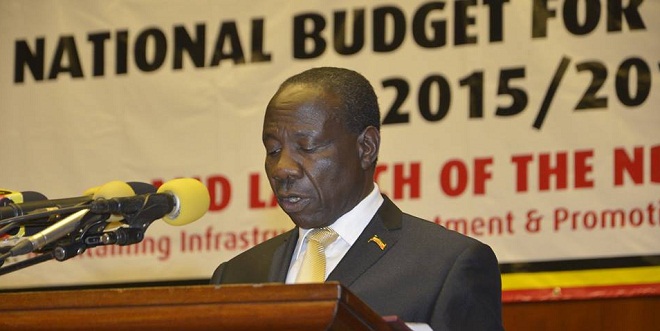
that will be presented next month will be worth a record Shs 26.3 trillion, an increase of 9%. What explains the increment? Indeed, the government had earlier showed interest to cut the budget to Shs 21.2 trillion citing reduction in anticipated public expenditure.
Nevertheless, it later turned out on April 27 that it had edited the financial plan to include an additional Shs 5.1trillion, contained in the Budget Corrigenda – a document that highlights additional estimates and variations – to finance some crucial activities. Finance ministry officials led by State Minister David Bahati told Parliament that the money was to finance various development projects including Shs 200 billion National Agricultural Advisory Services to boost production, Shs 445 billion in infrastructure, and Shs 30 billion towards compensation of people in Luwero and Northern Uganda.
Other areas whose funds were initially excluded from the budget, according to finance officials, were to Finance Treasury redemption and external financing.
Fred Muhumuza, a research and advocacy specialist at the Financial Sector Deepening Uganda, is one of the analysts who expressed surprise at the new development. He told The Independent that while some of the projects would not necessary require new funding since they are meant to reconcile the records with the Treasury bills issued, the finance ministry should have seen and made steps to avert the last-minute revision earlier.
His opinion was that some of the extra funds are only required for political reasons and as such the government is trying to safeguard itself from requesting for supplementary budgets in case of political pressures from the voters in the coming months.
“The government is simply trying to ensure that everything is in the budget so that when need a rises, they will not seek for a supplementary budget,” Muhumuza said.
The proposal to raise the national budget is raising even more eyebrows given that it comes at a time when the Uganda Revenue Authority is struggling to meet its revenue targets to finance the budget. To make matters worse, Members of Parliament are trying to deny the budget an additional Shs 40 billion by exempting their allowances from taxes.
Analysts wary as tax revenues falterURA has so far collected Shs 8.1trillion in the last nine months, showing a shortfall of Shs 194.6 billion against the target for the period, and an indication that it is likely not to meet its annual target of Shs 10.6 trillion with only three months left.
For the years now, Uganda tax efforts to finance the budget has stagnated around 12.5 to 13% of the GDP largely due to the narrow tax base and large informal sector, says Ezra Munyambonera, a Senior Research Fellow at the Economic policy Research Centre, Makerere University.
On this year’s budget allocation, of which 70% is to be financed locally through domestic taxes and local borrowing, the ministries of works and transport, energy and mineral development, health and agriculture are expected to get an increase in the government spending, according to the national budget framework paper 2016/17.
No comments :
Post a Comment