Entrepreneurs Are Betting on a Billion-Dollar Future for Hemp
Thanks to new laws,
hemp food products have the opportunity to become big business; now, two
nonexperts hope to create a new category.
By Kate Krader
Meet your local hemp farmers.
Before he started JD
Farms, Mark Justh was a managing director for JPMorgan Chase & Co.
in Asia. His co-founder, Dan Dolgin, worked in counterterrorism for
various agencies in Washington.
Now these two men are partners in
the hemp business. JD Farms specializes in top-quality food
products—including baby greens salad mix, pasta, and cold-pressed
oil—and its becoming a culinary sensation across the country.
There’s hemp out in those hills.
Photographer: Jessica Barthel
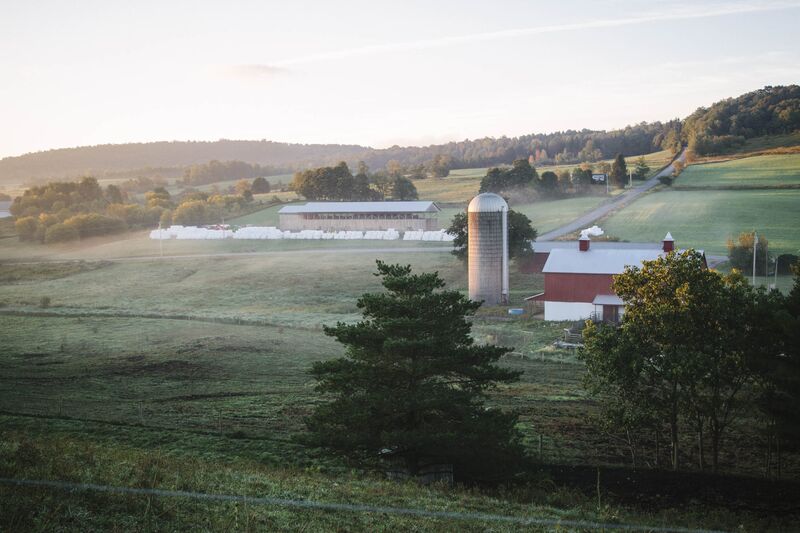
Located in Eaton, N.Y., about 30 miles southeast of Syracuse,
JD Farms is the first legal hemp farm in New York in more than 80
years. It’s set on 1,500 acres of certified organic land, which Justh
purchased in 2008 when he developed an interest in sustainable
farming. “There was a tremendous agricultural infrastructure,”
Justh says of the potential he saw. “The region had been a major dairy
area, but the farms were neglected. Commodity milk prices had challenged
the local economy.”
He’d originally planned to grow organic
produce; hemp would simply be the cover crop, as protection against
weeds. However, “hemp began to look very interesting,” he says. “Then
Dan got involved, and we saw the possibility of hemp as a food product.”
Cybersecurity Farming
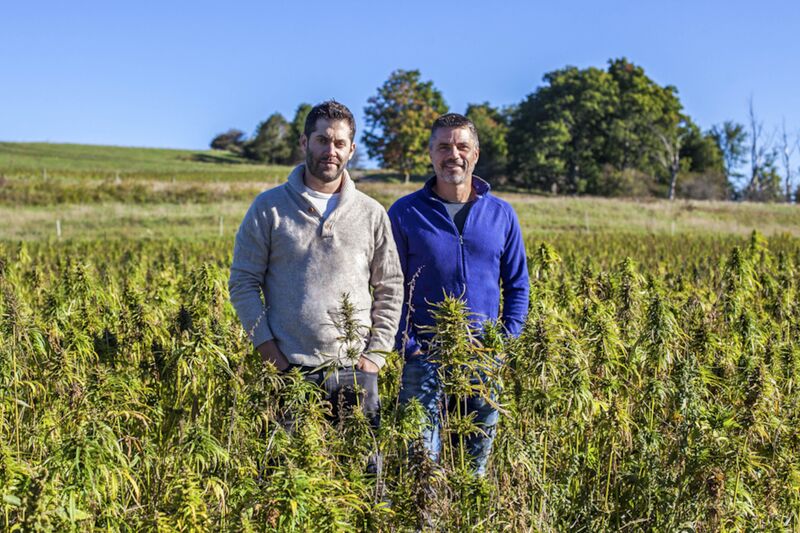
Field of dreams: Dan Dolgin (left) and Mark Justh represent the burgeoning hemp food industry.
Photographer: Jessica Barthel
Dolgin
was a veteran of the Office of the Director of National Intelligence
and the National Counterterrorism Center, both in D.C., before he
got burned out on government jobs. He’d been working on cybersecurity
projects in New York when he met Justh. “I grew up as a Jewish kid on
Long Island,” Dolgin says. “I like the idea of making an impact in a
depressed New York community, and of looking at agriculture in a new
way. We began to consider hemp. Because of my regulatory background, I
knew how government works—and doesn’t work.”
Justh, meanwhile, saw
the financial possibilities. “I’d been approached about growing medical
marijuana. But I thought, What can I produce that has a competitive
advantage? How do I compete with the Midwest, with Ukraine? I realized
it was a question of government regulation. And I have a partner who is
very intelligent about regulatory issues.”
Although it’s
constantly mistaken for cannabis, and it comes from the same plant, hemp
is not the same product. While marijuana is bred to include potent
amounts of THC, hemp has only trace amounts—it contains less than 0.3
percent of the hallucinogen. “You could smoke a football field of
hemp and you wouldn’t get high, you’d get a headache,” is how Dolgin
describes it. Still, when it planted its first seeds, JD Farms had to
install an armed guard. (Until they’re planted in the ground, hemp seeds
are considered a Schedule I narcotic, according to Dolgin.)
Hemp, the plant, is traditionally known for its use in
textiles and ropes. That’s because of its strength: After about three
weeks of growth, a hemp stalk will be so sturdy it’s almost impossible
to break, because the fibers are so long and strong. But for culinary
products, it’s the seeds that are all-important. After they’re pressed
to produce oil, the resulting byproduct can be processed into a flour
from which products like pasta can be created. JD Farms has also started
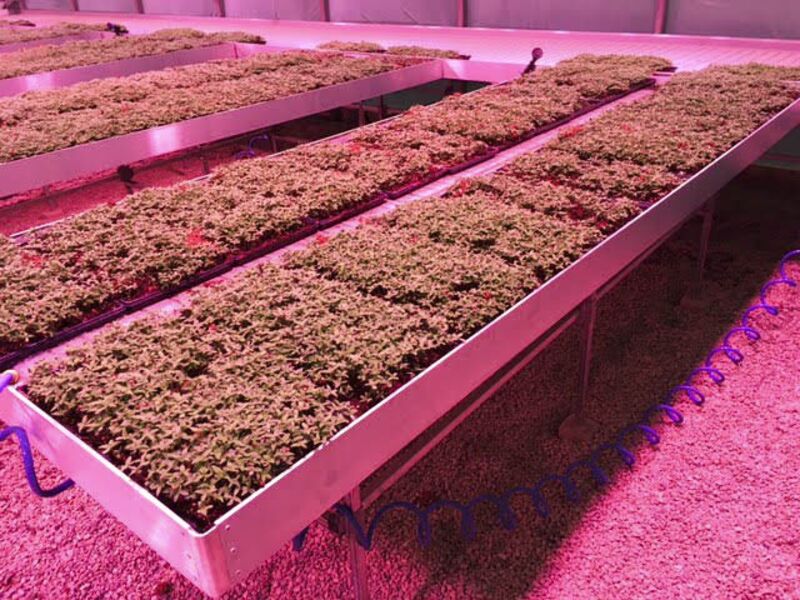
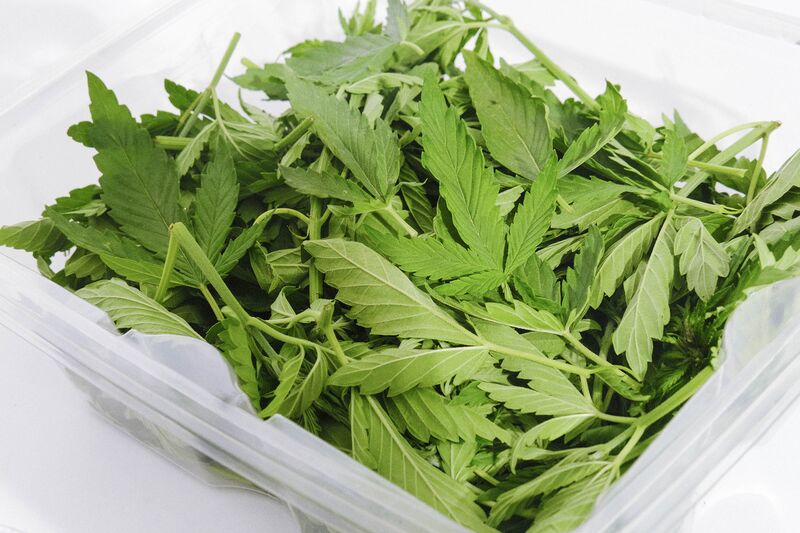
cultivating young hemp leaves into salad mixes.
A New Old Industry
Hemp contains only trace amounts of THC.
Courtesy of JD Farms
For
those unfamiliar with the status of hemp these days, Dolgin supplies
the 30-second download: “In the ’70s it got caught up with marijuana in
the anti-drug laws. It stayed that way for several decades, until the
tobacco industry hit rock bottom and states like Virginia realized they
need a new crop for farmers. In 2014 the passage of the U.S. Farm Bill
allowed states to conduct hemp pilot programs. You could grow hemp if
you were certified and licensed.” Because of the government work Dolgin
had done, he was able to work closely with state senators and Governor
Andrew Cuomo’s office to pass a series of bills that allowed JD Farms to
grow hemp. The industry is currently a $688 million business in the U.S.
In
March 2016, JD Farms became the first private farm certified to grow
hemp under a New York state pilot program; it planted 100 acres’ worth.
That, however, did not legally give JD Farms the right to sell its
product. “There was a chance we were going to have to burn the hemp if
the law didn’t pass,” Justh says with a worried laugh.
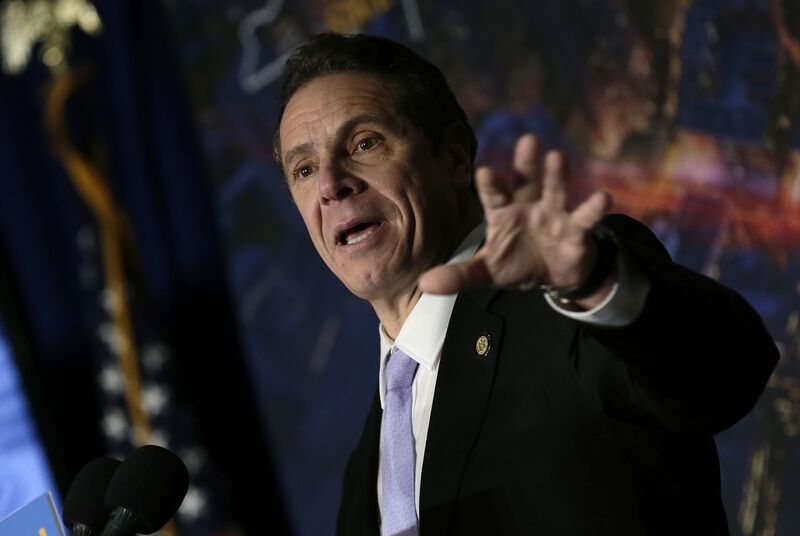
Governor Cuomo predicts hemp can be a billion-dollar business for New York state.
Photographer: Peter Foley/Bloomberg
In
August, Governor Cuomo signed the bill that made it legal for JD Farms
to sell its harvest. In his State of the State address in January, the
governor noted that hemp had the potential to become a billion-dollar
industry in New York. JD Farms’ bet had paid off.
Says Dolgin, who
worked with state legislatures to help get the bill passed: “What we
brought to the table is that we treated hemp as a big agriculture
business, not as a few plants in a greenhouse like marijuana.” Justh
adds, “For hemp to take its greater place in the agricultural landscape,
it needs to be seen as a commodity.” Dolgin sums it up: “We’re very
bullish about the food aspect of hemp. It’s right for an American farm
to dominate that market, especially in the organic space.”
Hemp as Food
A box of good-for-you hemp.
Photographer: Evan Ortiz/Bloomberg
There
was another reason hemp appealed to the pair: its potential to be the
next runaway hit food product, the next kale. “Mark and I both live
pretty healthy, active lifestyles,” remarks Dolgin. “We both knew that
hemp was on its way to becoming a superfood, in that category of flax
and chia seeds. We saw a sustainable long-term play in that market.”
Hemp flour products are high in protein (only soybeans have more), and
hemp contains 20 amino acids, including nine that the body doesn’t
produce. Among its reputed health benefits: immune-system booster,
weight suppressant (because it’s high in fiber), and an ability to lower
blood pressure and cholesterol. It’s popular with vegetarians because
it’s high in the fatty acids omega-3—found in good-for-you fish like
salmon—and omega-6.
And then there’s the quality. JD Farms’ oil
tastes fresher than other hemp oils because it’s produced in the
U.S. The majority of hemp oil and seeds sold in America comes from
plants grown in Canada. (According to the Toronto Star, in the first quarter of 2015, Canada exported $34 million worth of hemp seeds and oil.)
Before hemp enters the U.S. it must be sterilized. (If it’s not, it
counts as a Schedule I drug, along with substances such as heroin and
ecstasy.) When it’s heated, hemp loses its pungent freshness and
nuttiness. “It’s such an oily seed, heat speeds up the rancidity,” Justh
says. “Plus, it’s just sitting around in vats. It’s got nothing in
common with a product that is fresh from the field.”
At JD
Farms, harvested seeds are cold-pressed. “We look at it like fine
wine—you can taste the terroir, can taste the fields, which gives it
earthy flavor. The product is so good, it can be used as a dipping oil;
it doesn’t have to hide behind other ingredients.”
Restaurants Are Already Using It
Among the fans of JD Farms products is the dynamic
chef Ignacio Mattos, of Estela and Flora Bar at the Met Breuer in
Manhattan. “We are always pursuing new ingredients and flavors,”
Mattos said in an email. “The leaves have quite a unique flavor profile,
they’re grassy and sweet. The seeds are a bit nutty and sweet when
they’re raw. The texture is quite fun when it’s toasted and a bit more
savory when cooked.” He’s working on using the seeds in desserts and
adding the oil to a tomato and mozzarella salad.
At the hit New York restaurant Sunday in Brooklyn, chef Jaime Young is using JD Farms hemp seeds in a togarashi-style
spice blend he sprinkles on his fried chicken. “The seeds are
great,” Young says. “They have a slightly floral character and wonderful
texture, almost like cracked coriander.”
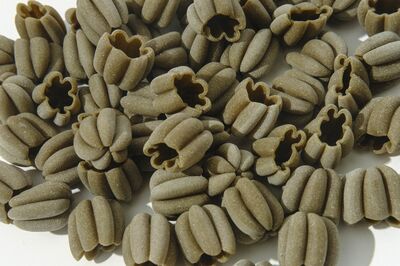
Earthy, nutty hemp-based pasta from JD Farms and Sfoglini.
Photographer: Evan Ortiz/Bloomberg
One
company that’s paying attention to JD Farms is Whole Foods Market Inc.
According to one of its senior global grocery buyers, David Lafferty,
“shoppers are seeking out hemp products more than ever, thanks to both
product innovation and the increased promotion of hemp’s nutritional
benefits by food brands.” JD Farms has teamed with Satur Farms—the Long
Island-based supplier of gourmet greens and vegetables—on a baby greens
mix of kale and hemp that will be available at Whole Foods throughout
the Northeast by the end of July. The salad’s sharp leaves are vaguely
reminiscent of pot and have a similar sharp, almost minty flavor.
Co-owner Paulette Satur describes the flavor as “lemony,” and is
optimistic about the project. “We decided it fits in well with kale in
terms of texture and its being chockablock with health benefits. And
we’re the first to offer baby hemp leaves in the U.S., which is
exciting.” Of the slight, physical resemblance hemp shares with pot
leaves, Satur jokes, “Maybe this is a good way to get older kids to eat
their vegetables.”
Another partnership, with Brooklyn-based
Sfoglini, has resulted in charcoal-colored, nutty-tasting dried pasta in
shapes like tubular Hemp Zucca and Hemp Radiators, which are available at sfoglini.com.
“As
we researched hemp food products, the majority of it was as a base
ingredient for shakes and smoothies,” says Dolgin. “We believe the next
iteration of the hemp market is to go into snack foods, to give it wider
penetration into households,” he says. “We’re looking at products
like ice cream and beer. We already have a pretty broad product
portfolio, and we want to get even more innovative.”
Before it's here, it's on the Bloomberg Terminal.LEARN MORE


No comments :
Post a Comment