
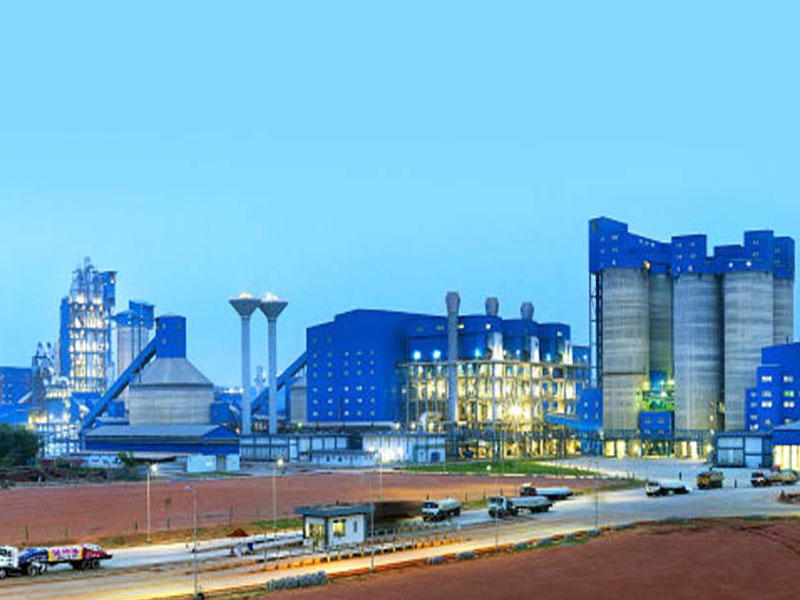
 Dangote Cement Factory, Obajana, Kogi
Heavy rains and uncertainties in
Nigeria’s political landscape in 2018 were not enough threats to
improved profitability for Dangote Cement, a leading cement
manufacturing group in Africa, as consumption in the country boosted its
revenue to about N901billion. The sterling performance ostensibly
accounted for 0.5 per cent of Nigeria’s GDP in the review year. Bamidele
Famoofo reports
Manufacturing Sector
The manufacturing sector of the economy
was one out of four major sectors in the non-oil sector that
helped
Nigeria’s Gross Domestic Product (GDP) grow by 2.38 percent in real
terms (year-on-year) in the fourth quarter of 2018, according to figures
from the Nigeria Bureau of Statistics (NBS).
The statistics bureau noted that nominal
GDP growth for the manufacturing sector was recorded at 33.57 per cent,
which is 24.37 percentage points higher than the rate recorded in the
corresponding period of 2017 (9.20 per cent), but only 0.84 percentage
points higher than the preceding quarter’s (32.73 per cent). Quarter on
quarter, growth of the sector stood at 6.62per cent, while annual growth
was 24 per cent in 2018. The contribution of manufacturing to nominal
GDP in Q4 2018 was 10.11per cent, which is higher than its contribution
in the corresponding period of 2017 (8.53 per cent) and Q3 2018 (10.01
per cent). For 2018, the sector contributed 9.75 per cent to total
nominal GDP, higher than its contribution, of 8.83 percent in 2017.
The growth represents an increase of
0.27per cent points when compared to the fourth quarter of 2017, which
recorded a growth rate of 2.11 percent. It also indicates a rise of 0.55
percentage points when compared with the growth rate recorded in third
quarter 2018. On a quarter-on-quarter basis, real GDP growth was
5.31percent.
The fourth quarter growth performance
implies that real GDP grew at an annual growth rate of 1.93per cent in
2018, compared to 0.82 per cent recorded in 2017, an increase of
1.09percentage points.
During the quarter, aggregate nominal
GDP stood at N35.230 trillion, which is higher than N31.275 trillion
recorded in Q4 2017, a nominal growth rate of 12.65 per cent. For 2018,
nominal GDP was therefore recorded at N127.762 trillion representing a
nominal growth rate of 12.36percent when compared to N113.711trillion
recorded in 2017.
The manufacturing sector comprises of 13
activities: Oil Refining; Cement; Food, Beverages and Tobacco; Textile,
Apparel, and Footwear; Wood and Wood products; Pulp Paper and Paper
products; Chemical and Pharmaceutical products; Non-metallic Products,
Plastic and Rubber products; Electrical and Electronic, Basic Metal and
Iron and Steel; Motor Vehicles and Assembly; and Other Manufacturing.
Dangote Cement
While the improved contribution of
non-oil sector and by extension the manufacturing subsector to GDP
growth have been applauded by economic pundits, the impact of Dangote
Cement in the revival of the near comatose manufacturing space in
Nigeria cannot be ignored.
Ostensibly, Dangote Cement, largest
capitalised company on the Nigerian Stock Exchange with a market
capitalisation of about N3.4trillion was a major contributor to growth
in GDP in 2018 with record revenue of N901billion in its financial year
ended December 31, 2018.
The ever expanding Dangote Cement Group
with established manufacturing plants across major countries in Africa
grew total revenue by 11.9 percent from N805.58billion in December 31,
2017 to N901billion in 2018.
Going by the details in the group’s
audited financial records for 2018, revenue was largely driven by the
Nigerian market where revenue grew by 11.9 percent from N552.36billion
in 2017 to N618.30billion. The implication is that consumption of cement
in Nigeria in the review year increased by 11.9 percent or about
N66billion.
Dangote Cement accounted for 0.5 percent
of nominal GDP in 2018 considering the N618.30billion total revenue
generated from the local market in comparison to an aggregate nominal
GDP of N127.76trillion recorded by Africa’s largest economy in 2018.
Financials
Dangote Cement Plc, Africa’s largest
cement producer, announces a group’s revenue of N901.2billion as at
December 31, 2018, which represents an increase of 11.9 percent compared
to N805.52billion in the corresponding period of 2017.
Group’s earnings before Interest, taxes,
depreciation, and amortisation (EBITDA), (used as an indicator of the
overall profitability of a business), moved up 12.1 per cent to
N435.3billion from N388.15billion in the preceding financial year.
Details of the report indicated that
Nigeria EBITDA increased by 10.2 percent from N360.76billion in 2017 to
N397.40billion in 2018, while margin also increased by 64.3 percent.
Pan-Africa EBITDA surged by 28.2 percent from N38.28billion in 2017 to
N49.1billion while margin growth was put at 17.3 percent in 2018.
Dangote Cement explained that the
increase in EBITDA was helped by the more favourable fuel mix at Obajana
and Ibese, both of which were able to use coal from mines operated by
its parent, Dangote Industries Limited.
“The use of expensive LPFO has been
eliminated and our reliance on imported coal has ended at Obajana and
Ibese, where we are using own-mined and third-party Nigerian coal, with
obvious benefits to both margins and foreign currency demands. All of
our eight kilns at Obajana and Ibese are now capable running on coal,
gas or LPFO, or a mixture of the three. Our two lines at Gboko run on
coal or LPFO or a mixture of the two”, the leading cement company in
Africa revealed.
Further breakdown of the audited 2018
financial figures showed that earnings per share (EPS) of the cement
group went up by 95.9 per cent to N22.83. To reward its shareholders
across board, Dangote Cement has proposed a dividend of N16.00 per share
which represents a growth of 52.4per cent compared to the dividend paid
in 2017.
Speaking on the performance, Group Chief
Executive Officer, Joseph Makoju, said: “This is a record financial
performance by Dangote Cement, driven by a strong increase in our home
market, Nigeria, despite heavy rains and uncertainties about the
election. Although Pan-African volumes were unchanged in 2018, I am
confident that we will see an increase in 2019, driven by higher volumes
in Tanzania, Ethiopia, Congo and Sierra Leone. Now that we have gas
turbines operating in Tanzania we will also see increased profitability
in the Pan-Africa region and this will help to improve overall Group
margins.”
Operating Highlights
Dangote Group revenue was driven by
sales volumes which went up by 7.4 per cent to 23.5 metric tonnes (Mt)
in 2018 driven largely by the Nigerian operations, which increased
volumes by 11.4 percent to 14.2Mt in 2018, including export sales of
0.7Mt. Domestic sales in Nigeria were 13.4Mt, compared to 12.0Mt in
2017, because of higher building activity as the economy recovered from
recession.
“In Nigeria, our 13.3Mta Obajana plant
sold 6.7Mt of cement in 2017, with the 12.0Mta Ibese plant also selling
nearly 6.7Mt. Our 4.0Mta plant at Gboko, in Benue State, was mothballed
for most of the year but sold more than 0.8Mt,” the group remarked.
Meanwhile, group manufacturing costs
increased by 9.1percent, mostly as a result of increased volumes in
Nigeria. Manufacturing costs in Nigeria increased by 7.4per cent from
N158.6billion to N170.3billion, on the back of the 11.4 per cent
increase in sales volume for 2018.
Although Pan-African volumes remained
constant, manufacturing costs increased by 10.6 per cent from
N192.7billion to N213.0billion, mainly due to exchange rate impacts as
well as input price adjustments.
The naira traded at N359/$1 at the end
of 2018 compared to N331/$1 at the end of 2017, a decline in value of
7.8percent. The depreciation also contributed to the overall increase in
Pan-African operating costs when these were converted to naira. The
average exchange rate and year-end exchange rate for the main currencies
applied are as shown in the notes to the financial statements.
Besides, total administration and
selling costs rose by 22.0 per cent to N189.4billion, mostly as a result
of higher sales and associated distribution costs in Nigeria, which
also include increased export sales from the country whose delivery
costs are higher. Haulage expenses in Nigeria increased by N10.2billion
to N56.7billion from N46.5billion. Haulage costs in Pan-Africa increased
by N3.2billion, representing 11.3per cent increase.
Changes
Mr. Olusegun Olusanya resigned from the
board after being with Dangote Cement for about 15 years. Another major
change on the board in the financial year ended December 31, 2018 was
the resignation of the Group Chief Financial Officer and Board member,
Brian Egan. The Irish finally quit the organisation on February 28, 2019
after five years with Dangote Cement.
In the interim, Guillaume Moyen, who
recently joined Dangote Cement as Group Chief Finance Officer
(Operations) will be Acting Group Chief Financial Officer from March 1,
2019.
Outlook
Dangote Cement believes the year 2019
has started well with sales volumes in Nigeria more than 10 per cent
ahead of last year in ongoing first quarter. It is also hinging its hope
on federal government’s commitment to a strong programme of
infrastructure investment and incentivisation that will drive increased
road building, including the construction of concrete roads for better
performance in 2019.
No comments:
Post a Comment