Investors are regularly reminded of the wisdom of
investing offshore and not adopting an investment strategy that focuses
only on South African assets.
There are a number of compelling reasons for investing offshore. Briefly, these include:
1. Diversification benefits
Investing in international assets allows for greater diversification,
which is a
key investment principle for reducing risk. In addition,
investing in international markets provides access to countries,
currencies, asset classes and industries that are not available locally.
2. Reduced emerging-market risk
SA remains an emerging market, albeit with pockets of first-world
industries (such as banking and mining) and infrastructure (for example,
roads, ports and railways). By world standards, though, SA is a small
economy with a relatively illiquid and volatile stock market.
Interestingly, while the FTSE/JSE all-share index makes up less than
1% of the world’s market capitalisation, SA’s gross domestic product
(GDP) comprises only about 0.5% of the world’s GDP.
Why is the size of market capitalisation compared with GDP so high in SA?
The reason is that SA was among the earliest adopters of a market
exchange aimed at raising external capital to finance business activity,
which happened to be mining at the time. (The JSE was founded by
Benjamin Woollan in November 1887 to provide a marketplace for the
shares of SA’s many mining and financial companies following the
discovery of the Witwatersrand gold fields in 1886.)
It was not until more recently that financial markets geared towards
raising external capital became a feature in many other emerging
markets, including Russia and China.
Why is this relevant? Index trackers and many global portfolio
managers base their allocation to a particular emerging market on
relative market capitalisation, not GDP. It is likely that other
emerging markets will, over time, see a proportional increase in their
market capitalisation in line with their relative GDP, thereby reducing
SA’s relative market capitalisation.
Ultimately, this change will likely mean fewer capital flows to SA, which will put pressure on the rand.
3. Reduced currency risk
All things being equal, economic theory states one can expect a
currency to depreciate in line with the differential between that
country’s inflation rate and those of its major trading partners. With
inflation still hovering closer to the upper end of the South African
Reserve Bank’s 3%–6% target, SA’s inflation rate exceeds, by some
margin, the inflation rates of its major trading partners. Therefore,
over time, the rand can be expected to depreciate against these
currencies.
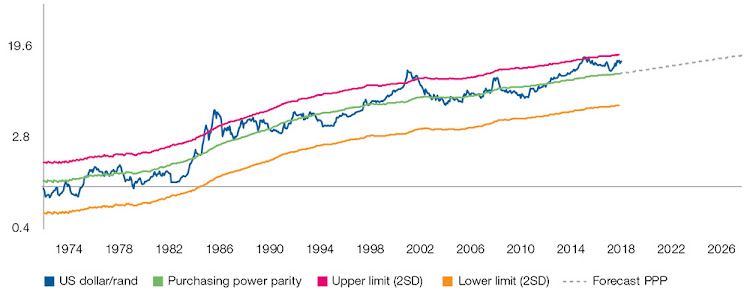
Figure 1 (below) illustrates the overall deteriorating performance of
the rand against the US dollar since 1972. The graph also uses the
theory of purchasing power parity (PPP) to show the relative cheapness
or expensiveness of the rand against the dollar over time. (PPP is a
theory stating that exchange rates between two currencies are in
equilibrium when their purchasing power is the same in both countries.)
No comments:
Post a Comment