
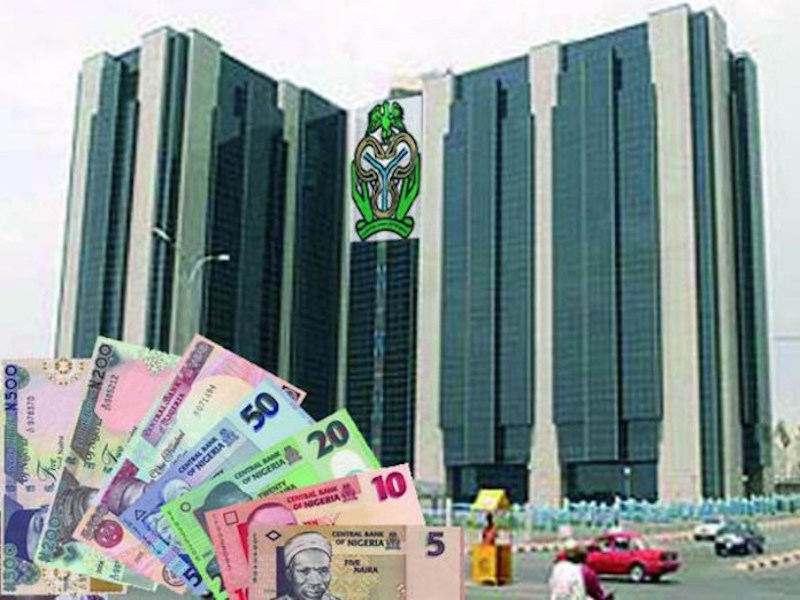
- HSBC UBS Close Nigeria Offices
Chika Amanze-Nwachuku with agency report
Global
banking giants, HSBC Bank and UBS Group, have closed their offices in
Nigeria, the Central Bank of Nigeria (CBN) said yesterday, while also
noting that foreign investment had fallen sharply from a year ago.
Foreign
direct investment in Nigeria fell to N379.84 billion ($1.2 billion) in
the first half of the year from N532.63 billion ($1.7 billion) a year
earlier, Reuters quoted a report by the apex bank to have said.
According
to the central bank, the outlook for the Nigerian economy in the second
half was optimistic given higher oil prices and production but rising
foreign debt and uncertainty surrounding the 2019 elections was a
drawback.
Investor
confidence in Nigeria has been shaken since the central bank in August
ordered MTN to bring back $8.1 billion to the country, part of profits
which the South African telecoms firm sent abroad, the newswire noted.
HSBC,
one of the world’s largest banking and financial services organisations
is headquartered in London while UBS is a Swiss multinational
investment bank and financial services company that provides financial
services to private, corporate and institutional clients in over 50
countries including Nigeria.
In September, HSBC Bank had predicted that re-electing President Muhammadu Buhari in 2019 could worsen Nigeria’s economic woes.
Although
the CBN did not disclose the reasons for the HSBC closure, financial
industry sources linked the development to the bank’s running battle
with the federal government over its poor rating of the Buhari
government’s economic policies.
A
source noted that the two firms’ decision to close their representative
offices in Nigeria could be a prelude to their eventual exit from the
country, adding that “this ugly development does not augur well for the
country.”
“It is also a signal that all is not well with the nation’s economy”, he added.
HSBC
had in a report in September by its Global Research Unit, entitled,
“Nigeria, papering over the cracks”, emphatically stated that Buhari’s
re-election for another term would spell doom for the country’s economy.
It
said: “Buhari’s second term raises the risk of limited economic
progress and further fiscal deterioration, prolonging the stagnation of
his first term, particularly if there is no move towards completing
reform of the exchange rate system or fiscal adjustments that diversify
government revenues away from oil.”The bank noted that the “economic
growth remains sluggish and reliant on the rebound in oil output while
the non-oil economy, which accounts for about 90 per cent of GDP,
continues to languish with many service sectors still mired in
contraction.”
Furthermore
it noted that “unemployment continues to rise, up almost three-fold in
three years to 19 per cent in Q3 2017, pushing the number in poverty to
87 million.”
The
bank also noted the country’s continued reliance on oil revenues, the
issue of inadequate non-oil tax collection, pointing out that a large
share of the budget was directed to debt service.
It
also faulted Buhari government’s debt management strategy and the
issuance of external debt to redeem more expensive short-term government
securities, pointing out that while it is helping to reduce debt
service costs in the near term, it exposes the fiscal position to
exchange rate risk in the event of a future decline in oil prices and
naira devaluation.
These
predictions by the bank did not go down well with the federal
government, which days, after, accused the bank of conniving with past
Nigeria’s leaders to loot the country’s resources.
The
Senior Special Assistant to the President on Media and Publicity, Garba
Shehuaccused the HSBC of laundering more than $100million for the late
General Sani Abacha in Jersey, Paris, London and Geneva.
He
said the bank was also suspected in the laundering of proceeds of
corruption involving more than 50 other Nigerians, including a serving
Senator.
Also, the Economic and Financial Crimes Commission (EFCC) accused the bank of engaging in money laundering.
It
claimed that “part of Abacha Assets yet to be recovered are: $12
million in HSBC Fund Admin Ltd with account number S-104460 in Jersey;
$20 million in HSBC Life (Europe) with account number 37060762 in U.K
and $1. 6 million in HSBC Bank plc with account number 38175076 in UK.”
HSBC’s
international network comprises around 7,500 offices in over 80
countries and territories in Europe, the Asia-Pacific region, the
Americas, the Middle East and Africa.
No comments:
Post a Comment